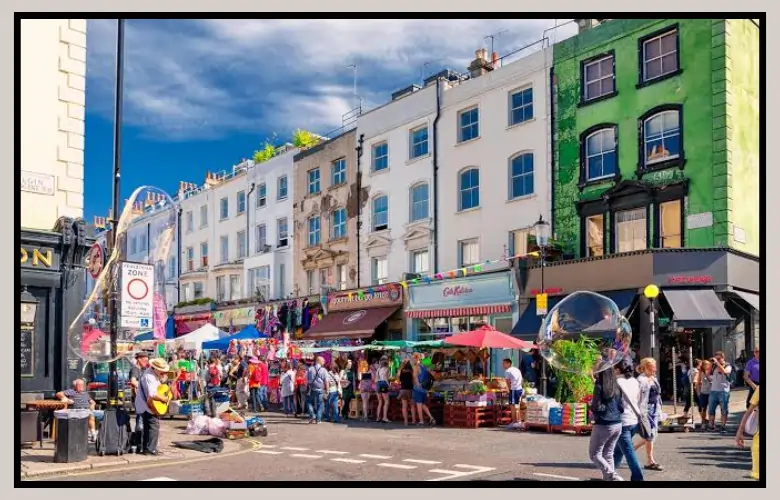
Portobello Road Market is one of the major attractions of London which attracts millions of people each year with its distinctive combination of antiques, vintage clothing, street foods, and local culture. Being situated in the colorful district of Notting Hill, this legendary market is stretched for almost two miles, providing people with a unique opportunity to shop and sightsee. It is worth noting that here you can find not only antique things and handmade crafts but also colorful houses and local cafes. No matter whether you visit Portobello Market for the first time or come here again in order to discover something new, it provides history, entertainment, and an authentic atmosphere of London.
History and Reasons Behind Its Popularity
The market developed during the nineteenth century as London expanded towards the west. Early traders mainly sold fruit, vegetables, household goods and other essentials to local residents. It was originally a practical neighbourhood market rather than a major tourist attraction. Its reputation changed when antique dealers began establishing businesses in the area during the twentieth century. Collectors soon arrived to search for furniture, jewellery, books, ceramics and decorative objects.
Vintage clothing, artwork, records and international food later became important parts of the experience. These additions attracted younger visitors and people who were not primarily interested in antiques. Today, shoppers can find old cameras, vinyl records, handmade products, fashion accessories and fresh produce. The changing selection means that every visit can offer something different. This unpredictability remains one of the market’s strongest attractions.
The street also has a connection with popular entertainment and cinema. Searches for Portobello Disney usually refer to the musical number featured in the 1971 Disney film Bedknobs and Broomsticks. The Portobello song was written by the Sherman Brothers and presents the market as a lively place filled with unusual treasures. Its appearance in the film strengthened the street’s international image. Many visitors still associate the real market with the colourful musical scene.
Portobello Road Market Opening Times, Saturday and Sunday
Portobello Market opening times can vary because the destination contains different stalls, arcades, permanent shops and food businesses. Individual traders may also change their schedules according to the season, weather and expected visitor numbers. Most permanent shops begin trading later in the morning and may remain open beyond the outdoor stalls. Antique arcades and specialist dealers often follow their own schedules. Visitors should therefore treat general operating hours as guidance rather than a guarantee for every business.
Portobello Market Saturday trading provides the widest range of antiques, collectables, fashion, food and second-hand goods. Saturday is normally the best day for first-time visitors who want to experience the market at its busiest and most complete. Arriving early gives shoppers more space to inspect products and speak with traders. Late morning and early afternoon usually bring the heaviest crowds. Visitors who prefer quieter browsing should consider Friday or an early weekday visit.
Portobello Market Sunday trading is generally more limited and should not be expected to match Saturday. Some permanent shops, cafés and local businesses may open, while outdoor market activity can depend on seasonal arrangements. Sunday can still suit visitors who mainly want to explore Notting Hill, take photographs or enjoy food. However, serious antique buyers should normally choose Saturday instead. Checking current local information before travelling can prevent disappointment.
Why Visit Portobello Road Market?
Portobello Market is much more than a place to shop. It offers a unique combination of history, culture, food, and entertainment, making it one of London’s most popular attractions for both locals and tourists. Whether you’re visiting for a few hours or spending the entire day exploring Notting Hill, there’s something for every type of traveller.
Highlights of Portobello Road Market include:
- One of the world’s largest and most famous antiques markets.
- Hundreds of independent stalls selling vintage clothing, jewellery, books, artwork, and collectables.
- A wide selection of international street food and local cafés.
- Colourful Notting Hill houses that are perfect for photography.
- Easy access by London Underground and public transport.
- Nearby attractions such as Westbourne Grove, Golborne Road, and Holland Park.
- A lively atmosphere with street performers and local artists, especially on Saturdays.
Whether you’re hunting for a rare antique, updating your wardrobe with vintage fashion, or simply enjoying the vibrant atmosphere, Portobello Market offers an authentic London experience that keeps visitors coming back year after year.
Location, Postcode and the Best Route
The market stretches through Notting Hill rather than operating inside one enclosed building. For this reason, there is no single Portobello Road postcode that represents every shop, stall and market section. Different addresses along the street use postcodes within the W10 and W11 areas. Visitors booking transport or checking directions should use the exact postcode of their chosen shop, café or starting point. This is more reliable than entering a general street name into a navigation application.
Notting Hill Gate is a practical starting point for the southern antiques section. Ladbroke Grove provides easier access to the northern market, the Westway and Golborne Road. A one-way walking route is more efficient than returning to the same station. Visitors can begin near Notting Hill Gate and finish near Ladbroke Grove or Westbourne Park. This route saves time and reveals how the products and atmosphere change as the street moves north.
Public transport is usually more convenient than driving because parking can be limited. Busy market periods may also bring traffic controls and heavier pedestrian activity. Comfortable shoes are essential because the complete route involves more walking than many first-time visitors expect. Travellers carrying luggage should store it before arriving because crowded sections can be difficult to navigate. A light bag also makes shopping and photography more comfortable.
Antiques, Vintage Fashion and Products to Buy
Antiques remain the market’s most famous product category. Visitors may find clocks, ceramics, jewellery, furniture, cameras, silverware, maps and decorative objects. Buyers should remember that an old appearance does not automatically make an item valuable. Condition, materials, restoration, rarity and demand all influence its genuine worth. Check for cracks, missing parts, repairs and replacement pieces before purchasing anything expensive.
Vintage clothing is another major attraction, particularly around the northern sections. Shoppers may discover denim, leather jackets, dresses, sportswear, military clothing and designer items. Check seams, zips, linings, buttons and underarms for damage or staining. Vintage sizing often differs from modern sizing, so trying clothes on is important. A well-made unbranded item may provide better value than a damaged designer piece.
Books, records, posters, postcards and photographs are useful choices for travellers. These products are easier to carry than furniture or large decorative objects. Record buyers should check for scratches, warping and water damage before making a purchase. Book collectors should inspect covers, bindings, pages and any signs of restoration. Comparing several traders can help buyers understand differences in condition, quality and price.
Food, Portobello Road Market Photos and Nearby Attractions
Food forms an important part of the visitor experience. Depending on the trading day, sellers may offer fresh fruit, baked products, coffee, desserts and international meals. The food selection is generally broader during the busiest market periods. Lunchtime queues can become long, so eating slightly earlier may save time. Visitors with allergies should always ask traders about ingredients and preparation methods.
People searching for Portobello Road Market photos will find many recognisable scenes around the colourful houses, shopfronts and antique displays. Early morning provides softer light and fewer pedestrians standing in front of the most photographed buildings. Ask permission before taking close pictures of traders, customers or valuable merchandise. Many colourful properties are private homes, so visitors should not block entrances or enter gardens. Respectful photography protects residents and creates a better experience for everyone.
Golborne Road is worth adding to the route because it offers a more local atmosphere. It contains independent shops, cafés and culturally diverse food businesses. Westbourne Grove provides polished retail options and additional places to eat. Holland Park offers green space for visitors who want a break from crowds. Combining the market with one or two nearby places creates a balanced half-day itinerary.
Benefits, Pros and Cons of Visiting
One of the strongest benefits is the variety of activities available. Collectors can examine antiques while fashion students study clothing from previous decades. Photographers can capture architecture, stalls and everyday street activity. Food lovers can sample several cuisines without travelling across different parts of London. Families can create simple activities, such as finding old toys or choosing an affordable souvenir.
The main advantages include free access, unusual shopping opportunities and a strong neighbourhood atmosphere. Visitors can support independent businesses rather than only purchasing from large retail chains. The changing selection makes repeat visits worthwhile and creates opportunities to discover one-off products. The surrounding architecture adds visual and cultural interest to the experience. Few conventional shopping districts provide the same mixture of retail, history and community character.
Crowding is the most significant disadvantage, particularly on Saturday afternoons. Prices can also be inconsistent because some products target tourists and specialist collectors. Rain, strong wind or extreme heat may reduce outdoor activity and make walking less comfortable. People using pushchairs or mobility aids may find narrow sections difficult during peak hours. Early arrival, suitable clothing and a clear budget can reduce many of these problems.
Is It Worth Visiting? Frequently Asked Questions and Conclusion
Overall, the market is worth visiting for people interested in antiques, vintage fashion, food, photography or London culture. It may not suit visitors who dislike crowds or expect every product to be inexpensive. The greatest value comes from the complete atmosphere rather than one particular purchase. A clear route and sensible spending plan make the trip more enjoyable. Visitors who explore beyond the famous southern section usually receive a more complete experience.
What is the market most famous for? It is best known for antiques, collectables, jewellery, ceramics and vintage fashion. Which day is best for visiting? Saturday normally provides the widest selection and strongest atmosphere. Is Sunday worth visiting? It can suit relaxed sightseeing, but market activity is normally more limited than Saturday. How long should visitors stay? Most people should allow two to three hours. Is there an entrance fee? There is no general charge for walking through the market.
Portobello Road remains one of London’s most memorable shopping destinations. Its antiques heritage provides historical importance, while fashion, food and independent shops keep it relevant to modern visitors. The Disney musical connection has also helped introduce its name to international audiences. Saturday offers the most complete experience, while quieter days are better for photography and neighbourhood exploration. With careful planning and realistic expectations, the market delivers a valuable combination of shopping, culture and local character.
(FAQs)
1. What is Portobello Road Market famous for?
It is famous for its world-renowned antiques, vintage clothing, collectables, colourful streets, independent shops, and a wide variety of international street food that attracts visitors from around the world.
2. What is the best day to visit?
Saturday is the most popular day because the largest number of traders are present, offering antiques, fashion, food, and unique collectables. Arriving early provides a more relaxed shopping experience.
3. Is it open on Sundays?
Yes, some permanent shops, cafés, and local businesses operate on Sundays. However, the outdoor stalls are fewer than on Saturdays, so the overall atmosphere is quieter.
4. How can I get there?
The easiest way to visit is by using the London Underground. Notting Hill Gate, Ladbroke Grove, and Westbourne Park stations are all within a short walking distance.
5. Is there an entrance fee?
No. Visitors can explore the area free of charge. You only pay for the food, drinks, or items you choose to purchase from individual traders.
Conclusion
Portobello Road Market is not just a shopping center, but it is the place where the historical and cultural essence of London unites. There is something for everyone, whether it is world-renowned antique markets, vintage fashion stores, international street food, and colorful Notting Hill streets. Planning a trip on the right day and coming early will save you from queues and give an opportunity to explore everything that the market has to offer. Due to its unique atmosphere and friendly local vendors, Portobello Market is still considered to be one of the best sights to see in London.