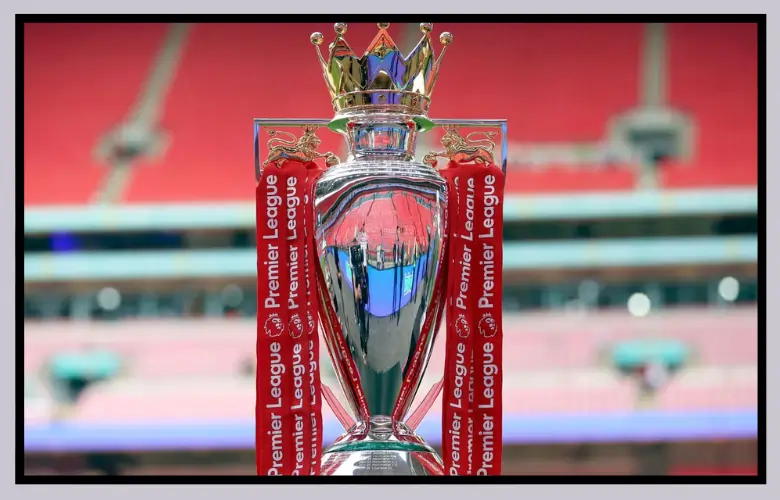
The Premier League trophy is one of the most recognized awards in world football, denoting excellence, consistency and success throughout an entire league season. Given to the team which places topmost at the end of 38 tough games, it symbolizes months of strategic thinking, player efficiency, squad depth and performance under pressure. The unique combination of silver body, gold crown and malachite green base makes it easily recognizable to fans around the world. Apart from being attractive, the award also has sporting, financial and sentimental significance. This article will discuss about the history, design, materials used, replicas, approximate cost, winning teams and celebration of Liverpool in 2025 and Arsenal in 2026.
History, Official Name and Meaning
The modern English top division was established in 1992 when clubs from the former Football League First Division created a new competition. England had crowned national champions for more than a century before that change, but the new structure brought stronger broadcasting agreements and greater commercial control. Manchester United became the first champions in the 1992/93 season under Sir Alex Ferguson. The competition originally contained 22 clubs before being reduced to 20 from the 1995/96 campaign. Every team now faces the other 19 clubs once at home and once away, creating a complete schedule of 38 fixtures.
Many supporters search for the official name of the championship silverware because some football cups have unique ceremonial titles. However, this award is simply named after the competition and does not have a separate historic name. Terms such as the league title, champions’ cup, winner’s prize and top-flight silverware are informal descriptions of the same honour. It must not be confused with the FA Cup or EFL Cup, which are separate knockout tournaments. The modern competition also has its own records beginning in 1992, while English top-flight championship records include titles won before that date.
The award represents season-long consistency rather than success in one final match. A victory gives a club three points, a draw provides one point and a defeat provides no points. The team with the highest total at the end of the campaign becomes champion. When clubs finish level, official tie-breaking rules such as goal difference and goals scored help determine their positions. This system makes every fixture meaningful because points dropped early in the season can become decisive several months later. Champions require technical quality, tactical flexibility, squad depth and the ability to recover quickly from disappointing results.
Design, Materials, Dimensions and Presentation
The design is based on the traditional Three Lions image associated with English football. Two lions appear above the large handles positioned on either side of the main body. When the winning captain stands between them and raises the silverware, the player becomes the symbolic third lion. The golden crown appears above the captain’s head and completes the visual concept during the presentation. This arrangement makes the captain part of the design rather than simply the person carrying it. Wide handles also provide enough space for ribbons matching the colours of the championship-winning club.
The official object stands approximately 104 centimetres tall and measures around 61 centimetres across. It weighs about 25.4 kilograms, making it considerably heavier than it appears during television coverage. The engraved base accounts for approximately 15.9 kilograms of the total weight. Its main body is constructed from solid sterling silver, while the crown uses 24-carat silver gilt. The base is made from malachite, a green semi-precious stone selected to represent the football pitch. Asprey London cast the official versions using its experience in luxury silverware and ceremonial products.
Two identical official versions exist rather than only one. During the season, one normally remains with the reigning champions while the other is used for league events, exhibitions and promotional activities. This arrangement becomes especially important when two clubs can still finish first while playing at different stadiums on the final day. An official version can be placed at each possible presentation venue until the results confirm the winners. During the ceremony, players receive medals before the captain raises the prize among team-mates. Music, coloured ribbons, confetti and fireworks often complete the celebration.
Replica Options, Estimated Price and Buying Advice
A replica of the championship silverware is usually produced for supporters, collectors, football shops, themed businesses, exhibitions or photography. Available products range from small desktop ornaments to larger models designed to resemble the original dimensions. Affordable versions may use resin, plastic or lightweight metal with a painted finish. More expensive models may include metal plating, engraved details, stronger handles and heavier display bases. Product photography can make a small item appear much larger than it really is. Buyers should therefore check the exact dimensions and weight rather than relying only on promotional images.
There is no confirmed public retail price for either of the two official objects because they are not ordinary products available for sale. Their value would include more than the cost of sterling silver, silver gilt and malachite. Specialist craftsmanship, competition ownership, engraving, historical importance and association with famous championship ceremonies would influence any professional valuation. Online estimates should be treated cautiously unless they come from the league, the manufacturer or an accredited valuation specialist. From a cultural perspective, the originals are effectively irreplaceable because a newly manufactured copy would not carry the same sporting history.
A licensed miniature is generally the most suitable option for an ordinary supporter. It requires less space, costs less to deliver and can be displayed safely in a bedroom, office or collection cabinet. A full-sized model may suit a sports bar, studio, shop or large private collection, but it needs a stable surface and careful handling. Buyers should confirm whether the branding is officially licensed and examine genuine customer photographs. They should also review the materials, delivery charges, packaging quality and return conditions. A high price alone does not guarantee authenticity, accurate dimensions or durable construction.
Winners, Title Records and Historic Campaigns
Only seven clubs became champions during the first 34 seasons of the modern competition. Manchester United remain the most successful side, while Manchester City created the strongest recent period of dominance. Chelsea and Arsenal have also enjoyed several championship campaigns, and Liverpool have twice finished at the top during the modern era. Blackburn Rovers and Leicester City each produced one historic victory. The complete title totals through the 2025/26 campaign are:
- Manchester United — 13 titles
- Manchester City — 8 titles
- Chelsea — 5 titles
- Arsenal — 4 titles
- Liverpool — 2 titles
- Blackburn Rovers — 1 title
- Leicester City — 1 title
Manchester United’s record was created through repeated rebuilding rather than dependence on one permanent squad. Sir Alex Ferguson developed successful teams around different generations of players, including Eric Cantona, Peter Schmeichel, Ryan Giggs, Paul Scholes, Cristiano Ronaldo and Wayne Rooney. Arsenal became United’s strongest early rival under Arsène Wenger, winning in 1997/98, 2001/02 and 2003/04. Chelsea changed the competitive balance after José Mourinho arrived in 2004, while Manchester City later established another dominant era through advanced coaching, recruitment and exceptional squad depth.
Several seasons became benchmarks for English football excellence. Arsenal completed the 2003/04 campaign without losing any of their 38 fixtures, earning the name “The Invincibles”. Manchester City became the first side to collect 100 points during the 2017/18 season and finished 19 points above Manchester United. Liverpool reached 99 points in 2019/20 and ended a 30-year wait for another English league championship. Leicester City’s unexpected 2015/16 success showed how intelligent recruitment, tactical discipline, counter-attacking speed and collective confidence could overcome much wealthier opponents.
Liverpool’s 2025 Celebration and Arsenal’s 2026 Success
Liverpool became champions of the 2024/25 campaign after defeating Tottenham Hotspur 5–1 at Anfield in April 2025. The achievement delivered their second title of the modern competition and their 20th English top-flight championship overall. That total brought Liverpool level with Manchester United’s national record. Arne Slot secured the honour during his first season as head coach after replacing Jürgen Klopp. He inherited a strong football structure but still needed to introduce his tactical approach, maintain player confidence and manage the pressure created by extremely high expectations.
The 2025 presentation carried additional emotional meaning because Liverpool’s previous success came during the 2019/20 season. Pandemic restrictions meant supporters could not attend the final matches or experience a normal celebration inside Anfield. Five years later, a full stadium could watch the players collect their medals and raise the championship silverware. The occasion gave supporters the public celebration they had previously missed. It also demonstrated the value of effective succession planning, as Liverpool successfully moved from Klopp’s influential era into Slot’s leadership without requiring a long rebuilding period.
Arsenal became champions in 2025/26, ending a 22-year wait since their unbeaten success in 2003/04. The achievement gave the club its fourth modern-era championship and followed three consecutive seasons in which it had finished second. Mikel Arteta’s team benefited from patient squad development, improved defensive organisation and experience gained during previous title races. Instead of abandoning its strategy after near-misses, Arsenal strengthened weaker areas and maintained a clear football identity. The 2026 celebration connected supporters who remembered Wenger’s successful teams with a younger generation experiencing its first English championship.
Benefits, Advantages, Risks and Is It Worth It?
Winning England’s leading domestic competition creates significant sporting benefits. The champions gain the clearest evidence that they performed more consistently than every rival across the complete season. Success can improve recruitment because ambitious players want to join clubs capable of winning major honours and competing in the UEFA Champions League. Existing squad members may become more willing to renew their contracts, while coaches, analysts and medical specialists may view the club as an attractive workplace. Players and staff also gain valuable knowledge about handling pressure, rotating the squad and preparing for decisive fixtures.
The commercial and cultural benefits can be equally important. Championship-winning clubs receive increased media attention, stronger sponsor exposure and greater demand for shirts, memberships, tours and commemorative products. Restaurants, hotels, transport companies and shops near the stadium may benefit from decisive fixtures and victory parades. However, the emotional value is often more important than the financial return. Families remember where they watched the deciding match, younger supporters develop a stronger attachment to the club and successful players become permanent parts of its history.
Pursuing the title also carries serious risks when a club lacks a responsible strategy. High transfer fees and large wages can create financial pressure, especially when spending assumes that future European qualification is guaranteed. Players may experience injuries and fatigue because leading clubs usually compete in several tournaments at once. Owners may become impatient and treat second place as complete failure, even when the team has made genuine progress. Winning is worth pursuing when ambition is supported by careful recruitment, financial control and long-term planning. The best objective is to build a sustainable challenger rather than win once at any cost.
Why Supporters Value the League Championship
Many supporters consider a league title the strongest domestic measurement of football quality. A knockout cup can be influenced by one poor performance, a favourable draw or a controversial refereeing decision. A league campaign requires every club to face the same opponents at home and away across several months. Champions must perform in different weather conditions, manage difficult stadiums and respond to many tactical styles. They cannot rely only on one outstanding player or a brief period of form. Their success must survive injuries, suspensions, fatigue and pressure from competing teams.
The long campaign also creates a deeper emotional story than a single final. Supporters remember turning points such as late goals, unexpected defeats, important saves and results involving title rivals. A victory in August may eventually prove as valuable as a major result in April. Fans travel to different cities, follow the changing table and calculate possible outcomes during the closing weeks. When the captain finally raises the silverware, the moment represents the complete journey rather than one afternoon. This long-term emotional investment explains why championship celebrations often continue for several days.
Winning can also influence the identity of a club for generations. Arsenal’s Invincibles, Leicester’s unexpected champions and Manchester City’s Centurions are remembered through distinctive names and stories. Successful squads inspire documentaries, murals, songs, museum exhibitions and anniversary events. Former players remain connected with the club because of their role in the achievement. Even supporters who were too young to witness a historic season learn about it through relatives and club media. A championship therefore becomes part of the organisation’s culture and can remain important long after its commercial benefits have declined.
Frequently Asked Questions
What is the official name of the Premier League trophy?
It is officially named after England’s highest domestic football competition. It does not have a separate ceremonial or historical name.
How heavy is the official silverware?
It weighs approximately 25.4 kilograms. Its malachite base accounts for around 15.9 kilograms of the total weight.
What materials are used to make it?
The main body is made from solid sterling silver, while the crown has a silver-gilt finish. Its green base is produced from malachite stone.
Do the champions keep the original permanently?
No. One official version normally remains with the reigning champions temporarily, but both original versions stay under the league’s control.
Can supporters buy an official replica?
Supporters can purchase licensed miniature models and display replicas. Buyers should check the dimensions, materials, licensing and seller reputation before ordering.
Conclusion
The trophy means much more than just an impressive silver object. The trophy is recognition of the team’s ability to demonstrate commitment, discipline, and tenacity throughout the entire 38 game season. It is distinguished by its original design, precious materials and the emblem of Three Lions that make the trophy special in English football. Some teams like Manchester United, Manchester City, Chelsea, Arsenal, Liverpool, Blackburn Rovers, and Leicester City have written their own stories about it. The victory of Liverpool in 2025 and Arsenal in 2026 is proof of how fast new stories will happen. In the end, the victory is worth trying with proper planning, recruitment and stability of the club in the future.