The Bodleian Library is undoubtedly one of the greatest and most illustrious libraries in the entire world, located at Oxford, England. The library was established in 1602 by Sir Thomas Bodley and has developed into an educational and research institute for the University of Oxford. After several hundred years since its establishment, the Bodleian has evolved into a renowned institution that serves as a representation of great knowledge. Hearing about the long and illustrious history of this institution can make visitors feel strongly connected to centuries worth of discoveries and studies. The library is now home to millions of books and manuscripts.
History and Foundation of the Library
The Bodleian Library Oxford was officially established when Sir Thomas Bodley restored an earlier library space at the University of Oxford in the early 17th century. His vision was to create a permanent institution dedicated to preserving and organizing knowledge for future generations.
When academics read the story of its foundation, they discover a powerful idea: knowledge must be protected, expanded, and shared across time.
In 1610, the library gained legal deposit rights, allowing it to receive a copy of every book published in the United Kingdom. This system transformed it into one of the most complete and valuable collections of written knowledge in Europe.
Over time, it expanded into multiple buildings across Oxford, each representing different eras of academic and architectural development.
Architecture and Design Highlights
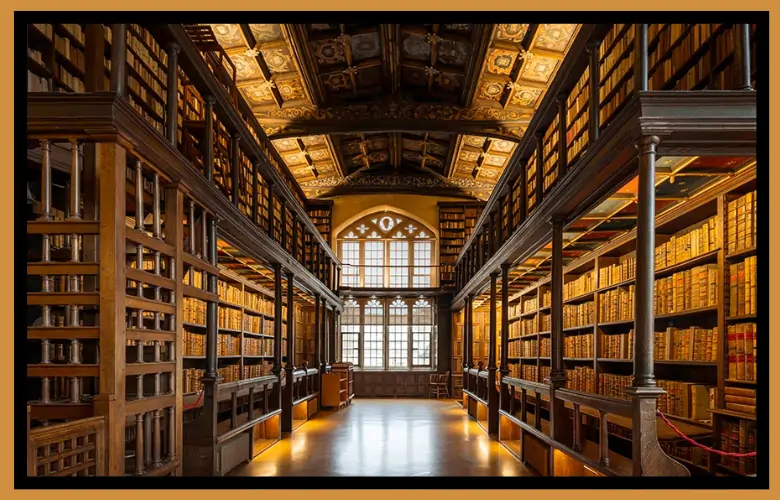
The architecture of the library is one of its most admired features, blending medieval, Gothic, and Renaissance styles into a single historic complex.
Visitors carefully inside its reading rooms often describe the atmosphere as silent, powerful, and deeply historic.
Key architectural highlights include:
- Duke Humfrey’s Library, the oldest reading room
- The Divinity School with medieval vaulted ceilings
- The Radcliffe Camera, an iconic circular structure
- Weston Library, a modern research and exhibition space
Each structure reflects a different stage of Oxford’s academic evolution, making the library both a working institution and a historic monument.
Manuscripts and Rare Collections
The library holds one of the largest manuscript collections in the world, with over 13 million printed items and tens of thousands of rare manuscripts.
Researchers to these collections uncover centuries of human thought preserved in handwritten texts, rare books, and historical archives.
Its holdings include medieval manuscripts, early printed books, scientific works, philosophical texts, and unique global archives. Many items exist in only one copy worldwide, making the collection extremely valuable for research.
Visitor Experience and Guided Tours
The visitor experience offers a rare opportunity to explore selected areas of this historic institution through guided tours.
When visitors visit expert guides inside the building, they gain insight into centuries of academic tradition and preservation practices.
Tours often include:
- Historic reading rooms
- Architectural landmarks
- Exhibition spaces
- Preservation and conservation displays
Due to high demand, booking in advance is highly recommended.
Academic Importance and Global Role
The library plays a central role in supporting research at the University of Oxford and beyond. It provides access to vast academic resources across humanities, science, law, and medicine.
When scholars examine the scale of its collections, they understand it is not just a library but a global system of preserved knowledge.
It also leads in digital preservation, ensuring rare manuscripts and documents are accessible while protecting fragile originals for future generations.
Key academic strengths include:
- Support for global research communities
- Digital manuscript archives
- Preservation of rare historical documents
- Interdisciplinary academic resources
Key Facts About the Library
- Founded in 1602
- Over 13 million printed items
- More than 80,000 manuscripts
- Legal deposit library of the United Kingdom
- Part of the University of Oxford system
When historians hear these facts, they recognize its importance as one of the most influential academic institutions in Europe.
Cultural Presence and Media Influence
The library is also known for its appearances in films and documentaries due to its historic and visually striking interiors.
Audiences are familiar with its cinematic presence and often immediately recognize its timeless academic atmosphere.
It is especially famous for its use in the Harry Potter film series, where it represented ancient and magical academic spaces.
(FAQs)
1. What is the Bodleian Library famous for?
It is famous for being one of the oldest libraries in Europe, its vast manuscript collections, and its role as the main research library of the University of Oxford.
2. Who founded the library?
It was founded by Sir Thomas Bodley in 1602, who restored and expanded the earlier University of Oxford library.
3. Can visitors enter the library?
Yes, visitors can access selected areas through guided tours, while most sections remain reserved for academic research.
4. What can you see inside the library?
Visitors can explore historic reading rooms, rare manuscripts, exhibition spaces, and iconic architectural areas like the Divinity School.
5. Is it still used today?
Yes, it is still fully operational and serves students, researchers, and academics worldwide.
Conclusion
The Bodleian Library is one of the most significant cultural and academic monuments in the world. It represents centuries of human knowledge and accomplishments. It continues to inspire people since its establishment in 1602 until now when it serves as an active research library for the University of Oxford. People who get familiar with its story and legacy can better appreciate the importance of passing knowledge from generation to generation. It is one of those places that symbolize education, exploration, and preservation of knowledge throughout history.