Buying a home or remortgaging in the UK requires a clear understanding of how mortgage interest works and how it affects long-term costs. Even small differences in rates can significantly change monthly repayments and the total amount paid over time. Lenders such as Skipton Building Society offer a range of mortgage options tailored to different financial situations, making it important to compare deals carefully. This guide explores skipton mortgage rates, how they are structured, and what factors influence them, helping borrowers make informed decisions when choosing the most suitable mortgage product for their needs in 2026.
What is Skipton Mortgage Rates?
skipton mortgage rates refer to the interest charged on home loans provided by Skipton Building Society. This interest is the cost of borrowing money from the lender and is added to the amount you repay over time. The rate is expressed as a percentage and determines how much extra you pay on top of the loan amount.
These rates are not the same for every borrower. They depend on financial factors such as income stability, credit history, deposit size, and overall risk level. Borrowers with strong financial profiles are usually offered lower interest rates, while those with higher risk profiles may face higher rates. This ensures that lending remains balanced and fair within the UK mortgage system.
Understanding How Mortgage Interest Works
Mortgage interest is the price you pay for borrowing money to purchase a property. When you take out a mortgage, you agree to repay both the original loan amount and the interest charged over a long period, usually 20 to 30 years. The interest is calculated on the remaining loan balance, which means the total amount you pay depends heavily on the rate you receive.
In the UK, mortgage rates are influenced by broader economic conditions. These include inflation, Bank of England base rate changes, employment levels, and overall financial stability. Lenders also assess individual borrower risk before offering a mortgage deal. This is why two people applying for similar loans may receive different interest rates.
How Skipton Mortgage Rates Are Structured
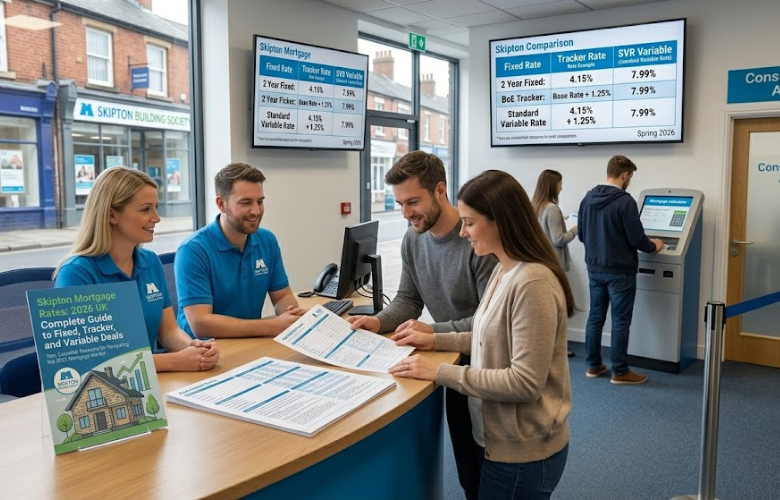
Mortgage products from Skipton Building Society are designed to meet different financial needs and risk preferences. The structure of the interest rate determines how stable or flexible your repayments will be throughout the mortgage term.Fixed-rate mortgages are one of the most popular options because they offer stability. The interest rate remains the same for a fixed period, usually between two and five years. This helps borrowers plan their finances with confidence because monthly repayments do not change even if market rates rise.
Tracker mortgages are linked to the Bank of England base rate. If the base rate goes up or down, the mortgage rate changes in the same direction. This means repayments can increase or decrease depending on economic conditions. While this option can offer savings when rates fall, it also carries the risk of higher payments if rates rise.
Current Mortgage Market Conditions in 2026
The UK mortgage market in 2026 is more stable compared to previous years of economic uncertainty, although interest rates are still higher than historic lows. Borrowers are now more focused on long-term affordability rather than short-term gains. Lenders have also become stricter in assessing affordability to reduce financial risk.
Fixed-rate mortgages remain the most widely chosen option because they provide security and predictable payments. Tracker mortgages are still used by borrowers who are comfortable with market fluctuations and want to take advantage of potential rate decreases. Variable rate mortgages are usually considered short-term solutions until borrowers switch to a more suitable deal. Within this environment, skipton mortgage rates remain competitive for borrowers with strong financial profiles, especially those with stable income and larger deposits.
Factors That Influence Mortgage Rates
Several important factors determine the mortgage rate offered to a borrower. One of the most important is the loan-to-value ratio, which compares the size of the mortgage to the property value. A lower ratio reduces risk for the lender and often results in better interest rates.
Credit history is another major factor. Borrowers with strong credit scores and consistent repayment history are seen as lower risk and are more likely to receive better mortgage offers. Income stability also plays an important role because lenders want to ensure borrowers can manage long-term repayments.
Economic conditions also affect mortgage pricing. Inflation levels, government policy, and central bank decisions all influence how lenders set interest rates. These factors directly impact skipton mortgage rates, making them sensitive to national financial changes.
Eligibility and Borrower Requirements
To access competitive mortgage deals, borrowers must meet certain financial requirements. A stable income is essential because it shows that the borrower can manage monthly repayments without difficulty. A strong credit score also improves approval chances and helps secure lower interest rates.
A larger deposit increases the likelihood of getting better mortgage terms because it reduces lender risk. Borrowers with smaller deposits may still qualify but often face higher interest rates due to increased risk exposure.
First-time buyers can benefit from special mortgage products designed to improve affordability and make entering the housing market easier. Self-employed individuals can also qualify, although they may need to provide additional financial documents such as tax returns or business accounts.
Importance of Comparing Mortgage Deals
Comparing mortgage deals is essential because the interest rate alone does not reflect the total cost of borrowing. Additional factors such as arrangement fees, early repayment charges, and product flexibility can significantly affect affordability.
Some mortgage products may offer lower interest rates but include higher upfront costs, while others may have slightly higher rates but lower fees. Understanding the full structure of skipton mortgage rates helps borrowers choose the most cost-effective option based on their financial situation and future plans. Careful comparison ensures that borrowers avoid unexpected costs and choose a mortgage that supports long-term financial stability.
UK Mortgage Market Trends
The UK mortgage market continues to evolve in response to economic changes and government policies. Fixed-rate mortgages remain the most popular choice due to their stability and predictable payments. Tracker mortgages are more attractive when interest rates are expected to fall or remain stable.
Lenders regularly adjust pricing based on inflation forecasts and market conditions. This means mortgage affordability can change quickly, making timing an important factor when selecting a deal. Skipton Building Society continues to offer a wide range of mortgage products designed to meet different borrower needs in this changing market environment.
- Also Read. Ines de Ramon: Full Biography and Career Guide From Jewelry Executive to Global Attention
(FAQs)
1. What are skipton mortgage rates?
They are the interest rates applied to home loans by Skipton Building Society, which determine your monthly repayments.
2. Are these mortgage rates fixed or variable?
They can be fixed, tracker, or variable depending on the type of mortgage product you choose.
3. How are mortgage rates decided in the UK?
They are influenced by the Bank of England base rate, inflation, and the borrower’s financial profile.
4. Can a larger deposit help reduce mortgage costs?
Yes, a bigger deposit lowers lender risk and usually results in more competitive interest rates.
5. Do first-time buyers get special mortgage deals?
Many lenders offer tailored products to help first-time buyers enter the housing market more easily.
6. What happens when a mortgage deal ends?
You are usually moved to a standard variable rate unless you switch to a new deal.
7. How can I find the best skipton mortgage rates?
Compare interest rates, fees, flexibility, and repayment terms before choosing the most suitable option.
Conclusion
Choosing the right mortgage is a critical financial decision that requires careful planning and a clear understanding of how interest rates impact long-term costs. By evaluating factors such as income stability, deposit size, and credit history, borrowers can improve their chances of securing favourable terms. Comparing different products and understanding market trends also plays an important role in making a smart choice. skipton mortgage rates continue to offer flexible options for a wide range of borrowers in 2026, making them a strong consideration for those entering or refinancing in the UK property market with confidence.