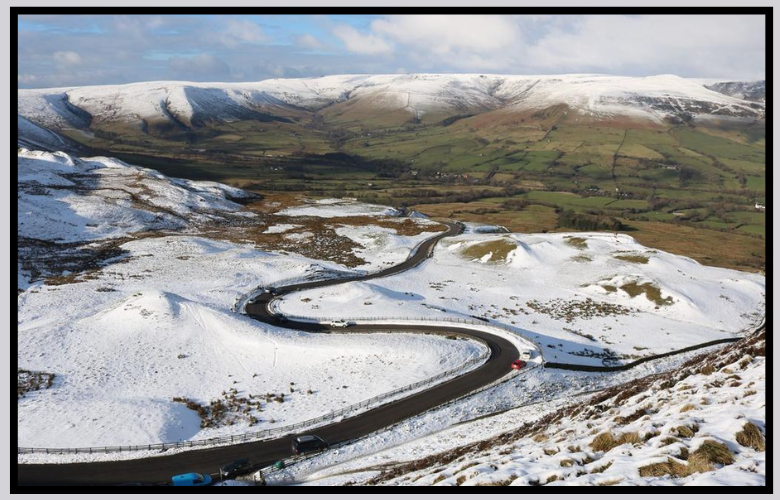
Planning walks, cycling adventures and family day outings in the Peak District requires knowledge about the local weather conditions. The weather in terms of rain, wind, temperature, clouds and visibility changes rather rapidly in the hills and valleys, and thus having an accurate forecast prior to your journey can be highly helpful. If you want to know what weather to expect tomorrow or a week/fortnight ahead of your journey and learn how to interpret various forecast periods, you will find all necessary information here. Here you will learn about 7, 14 and 21 days’ forecast, compare different weather forecasting websites and learn about the seasons.
Peak District Weather Forecast for Tomorrow and the Next 7 Days
When planning a visit for tomorrow, the most useful information is usually the hourly forecast rather than simply the overall daily symbol. A forecast can show when rain is expected, how temperatures may change during the day, and whether stronger winds are likely. This is particularly useful for walkers because a dry morning can sometimes become wet later in the afternoon. Checking conditions shortly before leaving can therefore help you decide whether to keep your original route or choose a shorter alternative.
People searching for weather in the peak district tomorrow are often trying to answer practical questions rather than simply looking for a temperature. They may want to know whether paths will be muddy, whether visibility will be suitable for a high-level walk, or whether strong winds could make exposed areas uncomfortable. Rainfall totals, wind gusts, cloud levels and visibility can sometimes be more important than the maximum temperature. A forecast that shows mild temperatures can still indicate difficult walking conditions if heavy rain or strong winds are expected.
The peak district forecast 7 days ahead is useful for planning a weekend break, booking accommodation or deciding which day to visit. However, conditions can change as the forecast period approaches. The forecast for the first few days normally gives more useful detail than information towards the end of the seven-day period. If your trip is several days away, use the forecast to understand the general pattern and then check it again closer to the date. This approach gives you a better idea of whether you should plan a long ridge walk, a lower-level route or an indoor alternative.
Peak District Weather 14 Days and 21 Days Explained
The peak district weather 14 days forecast can be useful when you need to organise a trip well in advance. It may show broad patterns such as a possible spell of wetter conditions, temperatures remaining above or below seasonal averages, or a mixture of sunny and cloudy days. It should not be treated as a precise prediction for a particular walking route. Small changes in weather systems can alter rainfall timing, wind strength and cloud cover several days ahead.
Searches for peak district weather 21 days usually reflect long-term planning rather than a need for an exact forecast. At this range, individual hourly predictions are much less dependable. A forecast may suggest a temperature trend or general weather pattern, but it cannot reliably tell you whether a specific trail will receive rain at 11am on a particular date. This is why long-range information works best as a planning tool rather than a final decision-making tool.
For longer trips, consider the forecast as a series of updates. First, use a long-range outlook to choose possible dates and activities. As the visit gets closer, move towards the seven-day forecast and then check the hourly details. On the day itself, pay particular attention to rainfall, wind gusts, visibility and any weather warnings. This gradual approach is more practical than making a detailed walking plan weeks before the forecast can provide dependable local information.
Peak District Weather BBC and AccuWeather Forecasts
Many visitors compare peak district BBC results with information from other forecasting services. BBC Weather can be useful for a straightforward overview of temperatures, rainfall and general conditions. Its presentation is easy to understand, which makes it suitable for people who simply want to know whether the day is likely to be wet, dry, cloudy or bright. For a walking trip, however, it is sensible to look beyond the main weather symbol and consider wind and visibility as well.
Another commonly searched source is peak district accuweather information. AccuWeather provides forecasts that can include daily and hourly details, precipitation information and temperature trends. Comparing different services can sometimes reveal that they do not give exactly the same prediction. This does not necessarily mean one forecast is wrong. Weather models process changing atmospheric information, and differences become more noticeable when looking further into the future.
The most useful approach is to compare the information that matters for your planned activity. Look at rainfall probability, expected precipitation, wind speed, gusts, visibility and temperatures. For walks on high ground, also consider forecasts designed specifically for hills and mountains where available. A general town forecast may not fully describe conditions on an exposed ridge or moorland plateau several hundred metres higher than the surrounding area.
Peak District Weather by Season and What to Expect
Spring can bring a mixture of sunshine, showers, cool temperatures and strong winds. Days gradually become longer, making it easier to enjoy longer walks, but conditions can still feel cold on exposed hills. Rainfall can make paths soft and muddy, particularly on popular routes. Walkers should avoid assuming that warmer temperatures in nearby towns mean the same conditions will be found on higher ground. A bright morning can also give way to cloud or showers, so flexible plans are useful.
Summer generally provides longer daylight hours and more opportunities for outdoor activities. Warm and sunny days can be excellent for walking, cycling and photography, but summer does not guarantee stable conditions. Heavy showers or thunderstorms can develop, while strong sunshine can create its own risks. On open trails, there may be little shade, so water, suitable clothing and sun protection are important. Early starts can also help visitors avoid the hottest part of the day and enjoy quieter paths.
Autumn often brings rapidly changing conditions, cooler temperatures and shorter daylight hours. Strong winds can become more important on exposed routes, while wet leaves and muddy ground can make paths slippery. Winter brings the greatest need for careful planning. Frost, ice, snow, low cloud and strong winds can affect higher routes even when conditions look relatively mild in surrounding villages. Daylight is also limited, so walkers should allow extra time and avoid leaving difficult sections until late in the afternoon.
How Weather Affects Walking Cycling and Family Trips
Weather can change the character and difficulty of an outdoor trip. A moderate breeze at a sheltered viewpoint may feel very different on an exposed ridge. Rain can reduce visibility, make rocks slippery and create muddy sections on heavily used paths. Strong winds can make cycling harder, while sudden showers can leave riders uncomfortable if they are not carrying waterproof layers. Families may also prefer shorter routes when temperatures are low or rainfall is expected.
Before setting out, consider the activity as well as the forecast. A casual family walk around a village may remain enjoyable during light rain, while a long exposed hike can become much less comfortable. Cyclists should consider wind direction and gusts, especially on open roads. Photographers may want to prioritise days with clearer visibility, although mist and dramatic cloud can create interesting landscapes. The best plan is not always to cancel an activity because of poor conditions; sometimes changing the route or start time is enough.
For a typical countryside day, useful items include:
- A waterproof jacket, comfortable walking footwear, warm layers, water, food, a charged phone, navigation equipment, a torch and basic first-aid supplies.
Weather also affects transport and timing. Heavy rain can make rural roads more difficult, while busy weekends can become slower if many visitors arrive during a spell of good weather. If you are staying overnight, checking the forecast before choosing your activities can help you divide the trip sensibly. For example, a clearer day could be used for a longer hill walk, while a wetter day could be reserved for villages, attractions, cafés or shorter low-level routes.
How to Read a Peak District Weather Forecast Properly
A useful forecast contains more information than a sun or rain icon. Start with temperature, but then look at the feels-like temperature, rainfall probability and expected precipitation. Wind speed and gusts are especially important in exposed areas. Visibility and cloud cover can also affect navigation and enjoyment. If the forecast mentions hill fog, low cloud or poor visibility, a route that depends on distant views may not provide the experience you expected.
The peak district monday and peak district sunday searches are good examples of why the exact day matters. Weekend visitors may find that conditions differ considerably between Saturday and Sunday, even when the general weekly outlook appears similar. Instead of choosing a day solely because the temperature is higher, compare rainfall timing, wind strength and daylight hours. A cooler but dry and calmer day can be more comfortable for walking than a warmer day with persistent rain and strong gusts.
Forecast confidence also matters. Information for the next 24 to 48 hours is generally more useful for detailed decisions than a prediction several weeks away. When conditions are uncertain, prepare for more than one possibility. Check official weather warnings before travelling, especially during periods of strong wind, heavy rain, snow or ice. On longer walks, remember that you may move through several microclimates, so conditions at the car park are not necessarily representative of the summit or ridge.
- Also Read. Brian Cox Actor Physicist and Career
Frequently Asked Questions
What is the weather in the Peak District tomorrow?
Tomorrow’s conditions can change as new forecast updates become available. Check the hourly forecast for rainfall, temperature, wind speed, gusts and visibility before setting out. These details are especially important for longer walks and exposed routes.
Where can I find a 7-day forecast for the Peak District?
You can find seven-day forecasts through major weather services. Compare daily and hourly information where available, paying particular attention to rainfall, wind and temperatures when planning outdoor activities.
How accurate is a 14-day forecast?
A 14-day forecast is useful for identifying general weather patterns, but individual details can change. Use it for advance planning and check a shorter-range forecast again as your visit gets closer.
Can I rely on a 21-day weather forecast?
A 21-day outlook is mainly useful for general planning. It can indicate possible temperature or rainfall trends, but it should not be treated as an exact prediction for a particular walking route or time.
What should I check before walking in the Peak District?
Check rainfall, wind speed, gusts, temperature, visibility and daylight hours. Also consider the route’s elevation and exposure. Conditions on higher ground can feel considerably different from those in nearby villages.
Conclusion
It is recommended to check the forecast when you visit the Peak District as this will allow you to organize your trips more conveniently and comfortably. The weather forecasts on short terms give good information on precipitation, wind, temperature and visibility; 14- and 21-day outlooks should be used for planning. It is also necessary to remember that conditions may vary from valley to village and from valley to the hills, and therefore changes during the day are expected. Comparison of several reliable weather services may assist in identifying possible changes in the forecast and in understanding the differences in forecast information. Remember to take into account the lighting, route difficulty and local warnings when checking the forecast.