For much of the twentieth century, a serious career in British marketing and advertising meant one thing: London. The big agencies were clustered around Soho and Covent Garden, the major brands kept their head offices in the capital, and ambitious graduates from across the country packed their bags and headed south.
That picture has changed considerably. While London remains the largest creative and marketing centre in the UK, cities such as Manchester, Leeds, Birmingham, Bristol, Edinburgh and Cardiff have developed thriving scenes of their own. Today, marketing jobs can be found in healthy numbers right across the country, and many professionals are choosing to build their careers without ever relocating to London.
Manchester and the MediaCity effect
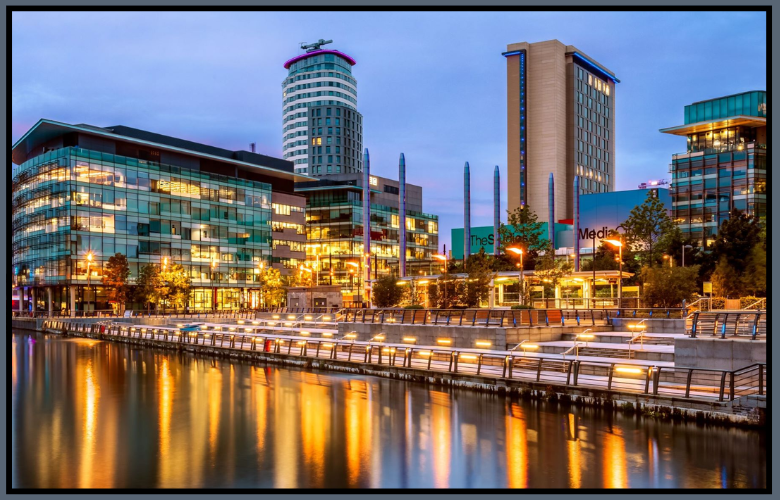
Manchester’s rise as a marketing hub owes a lot to MediaCityUK in Salford. When the BBC moved several major departments there from 2011, it brought thousands of media jobs to the North West and helped attract ITV, production companies and a wide range of creative businesses.
That cluster had a knock-on effect. Digital agencies, ecommerce brands and technology firms have grown up around it, and Greater Manchester is now home to a large number of marketing and digital agencies. The region’s universities feed a steady supply of graduates into the sector, and many choose to stay rather than move south.
Leeds and Yorkshire’s creative growth
Leeds received a significant boost when Channel 4 chose the city for its new national headquarters, which opened in 2021. The decision was widely seen as a vote of confidence in the region’s creative industries.
Even before that, Leeds had a strong base in financial services, retail and digital, all sectors with substantial marketing needs. The city’s independent agency scene has grown steadily, and the wider Yorkshire region hosts plenty of in-house marketing teams at well-known consumer brands.
Birmingham, Bristol and beyond
Birmingham has a long commercial history and a large, young population, which makes it attractive to businesses looking to grow marketing teams outside London. Its central location and transport links also help.
Bristol has built a reputation for creative and digital work, with particular strengths in animation, natural history filmmaking and design. That creative culture feeds into marketing, with agencies and brands drawing on a strong local talent pool.
Edinburgh and Glasgow have their own distinct scenes, supported by Scotland’s financial services, tourism and food and drink industries. Cardiff has grown too, helped by media production and a lively agency sector.
Why the shift happened
Several forces have pushed marketing work beyond the capital. Cost is one of the most obvious. Office rents and salaries are considerably higher in London, and businesses setting up or expanding teams can often get more for their money elsewhere.
Quality of life plays a part as well. Many professionals value lower housing costs, shorter commutes and easier access to the countryside, all of which regional cities can offer. Employers have noticed that these factors help with recruitment and retention.
Technology has made the biggest difference in recent years. Marketing has become increasingly digital, and most of the work can be done from anywhere with a laptop and a reliable connection. Video calls, cloud tools and project management software mean that a team in Manchester can work seamlessly with clients in London, New York or Sydney.
The move towards hybrid working has accelerated all of this. Many marketers now spend only part of the week in an office, which has made location less important than it once was.
What it means for the industry
The spread of marketing work across Britain has several benefits. It gives businesses access to a wider range of talent and perspectives, which can lead to campaigns that better reflect audiences across the whole country rather than just the South East.
It also creates opportunities for people who can’t or don’t want to move to London. Graduates from northern universities no longer have to choose between their home region and their career, and experienced marketers can find senior roles closer to family and friends.
For regional economies, growing marketing and creative sectors bring well-paid jobs and help diversify local employment. Agencies often support other businesses nearby, from photographers and printers to cafes and co-working spaces.
London still matters
None of this means London has lost its place. The capital remains home to many of the largest agencies, global brand headquarters and the highest salaries at the top end of the market. International businesses setting up in the UK still tend to start there, and the city’s density of events, networks and industry bodies is hard to match.
What’s changed is that London is no longer the only option. A marketer in Britain today can build a rewarding career in a range of cities, choosing the location that suits their lifestyle as much as their ambitions.
Looking ahead
The trend towards a more distributed marketing industry looks set to continue. As more businesses embrace flexible working and regional cities keep investing in their creative sectors, the map of British marketing will likely become even more varied.
For anyone considering a career in the field, that’s good news. Talent, skills and ideas matter far more than a postcode, and opportunities are increasingly spread across the whole of Britain.