The Nigel Farage plane crash remains one of the most shocking and dramatic moments in recent British political history. On 6 May 2010 — the day of the UK general election — a campaign flight meant to attract voter attention ended in catastrophe. Farage, the leader of the UK Independence Party at the time, found himself seconds from death when the small aircraft carrying him nose-dived into a field. What was intended to be a symbolic display of national pride quickly turned into a life-threatening accident. This incident not only changed Farage’s outlook on life but also added an unforgettable chapter to his political story.
The Flight That Changed Everything
The Purpose of the Flight
Early on election morning, Nigel Farage boarded a small two-seater plane at Hinton-in-the-Hedges Airfield in Northamptonshire. His mission was to fly across constituencies towing a banner that read “Vote for Your Country – Vote UKIP.” It was a visual strategy aimed at boosting voter awareness and party visibility. However, within minutes of takeoff, something went horribly wrong.
The Moment Disaster Struck
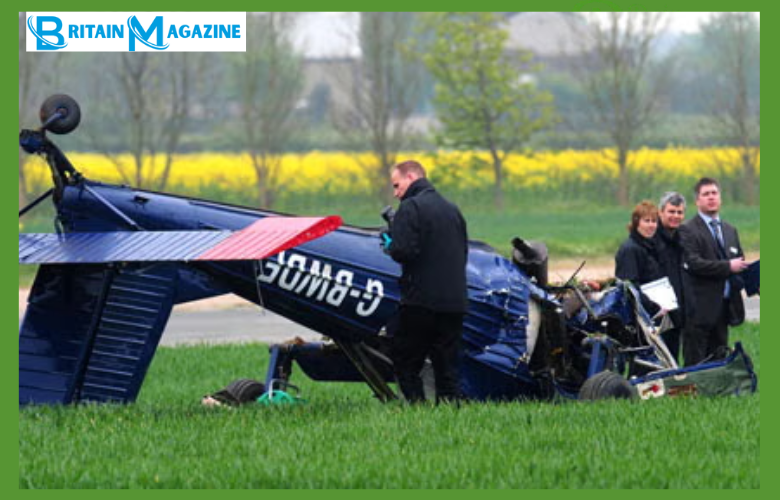
The aircraft began to lose control after the campaign banner became tangled in the tailplane and elevator. These parts are crucial for maintaining the aircraft’s stability, and their obstruction made it impossible for the pilot to maneuver. The plane started a rapid, uncontrolled descent before crashing into a nearby field. Witnesses reported hearing a loud bang and seeing the plane flip over on impact. The crash was so severe that rescuers arriving at the scene found the wreckage upside down, with Farage trapped inside and fuel leaking from the broken fuselage.
Nigel Farage’s Injuries and Immediate Rescue
The Battle to Survive
The Nigel Farage plane crash left the politician gravely injured. He sustained a fractured sternum, several broken ribs, a punctured lung, and severe spinal bruising. His face and hands were also cut and burned. Despite these injuries, Farage remained conscious throughout the ordeal, aware of the danger as rescuers worked to pull him from the wreckage. Emergency teams transported him by air ambulance to a local hospital, where he was treated for multiple trauma injuries.
The First Public Appearance After the Crash
Remarkably, Farage made a public appearance only days later. Though visibly shaken and wrapped in medical bandages, he appeared determined to show that he would not be defeated by the crash. This defiance reinforced his image as a man of resilience. His willingness to face the public so soon after a life-threatening accident drew both sympathy and respect, even from those who opposed his politics.
The Investigation and Official Findings
What Caused the Nigel Farage Plane Crash
The Air Accidents Investigation Branch (AAIB) immediately launched an investigation into the crash. Its official report concluded that the aircraft’s banner towline had become entangled around the tailplane and elevator, causing a total loss of control. The pilot, Justin Adams, had little chance of recovery once the tail surfaces were jammed. The report emphasized that the setup used for the banner had not been properly tested for aerodynamic safety, and that the forces generated exceeded the aircraft’s operational limits.
Lessons Learned from the Accident
The findings led to widespread discussions about aviation safety, especially regarding promotional flights during political campaigns. The Nigel Farage plane crash served as a warning to others about the risks associated with using small aircraft for advertising purposes. The report also encouraged stricter oversight for banner-towing flights, which had previously fallen into a grey area of aviation regulation.
Nigel Farage’s Long Road to Recovery
Physical Rehabilitation
Farage’s recovery process was long and painful. Doctors treated him for multiple fractures and internal injuries. His right hand was severely affected by nerve damage, leaving him with reduced coordination — a condition he admits persists to this day. The spinal trauma also caused lasting pain, making travel and physical activity difficult.
Refusing Disability Status
In later interviews, Farage revealed that a neurosurgeon had offered to register him as partially disabled, a suggestion he firmly refused. His decision reflected both pride and determination to maintain normalcy. He insisted that despite the pain and limitations, he would continue his work without concessions. This refusal became part of his public identity — a politician who refused to be defined by adversity.
Political and Personal Consequences
A Turning Point in His Career
The Nigel Farage plane crash came at a critical time in his political career. As leader of UKIP, Farage had hoped to boost his party’s visibility through bold tactics. Instead, the crash dominated headlines across Britain, overshadowing election coverage. Yet paradoxically, it made Farage a household name. The image of a bloodied, yet unbroken politician surviving a fiery crash resonated deeply with the public. It amplified his reputation as a fighter — both literally and politically.
A Changed Perspective on Life
Farage later reflected that the crash changed his view on life forever. He said it made him more aware of mortality and less tolerant of life’s trivial problems. During interviews, he admitted that in the final seconds before impact, his thoughts were with his family and the women he loved. Those intimate reflections gave the public a rare glimpse of vulnerability from a man often known for his fiery political persona.
The Pilot’s Story and Aftermath
The Fate of Justin Adams
Justin Adams, the pilot of the ill-fated aircraft, also survived but suffered serious injuries. The trauma from the event left deep emotional scars, and reports suggested that he struggled to cope with the aftermath. Adams’ life following the crash was marked by distress and turmoil, illustrating how the tragedy affected not only Farage but everyone involved.
The Human Cost of the Tragedy
While Farage recovered and returned to public life, the broader human consequences of the Nigel Farage plane crash extended beyond physical injury. It served as a reminder of the fragility of life and the unpredictable nature of fate, especially in high-risk environments like aviation.
Legacy and Historical Significance
A Symbol of Resilience
More than a decade later, the Nigel Farage plane crash continues to be referenced whenever Farage’s career is discussed. For his supporters, it symbolizes his resilience and refusal to surrender in the face of disaster. For critics, it stands as a cautionary tale about the dangers of reckless publicity stunts. Regardless of perspective, the incident remains a defining part of his public identity.
Media Coverage and Public Memory
The crash was covered extensively by British media, including The Independent, BBC News, and GB News. Each outlet chronicled the shocking details of the accident and Farage’s extraordinary recovery. The event has since been featured in documentaries, interviews, and biographies about Farage’s life. Its enduring presence in public memory proves how powerfully it shaped his image.
Visual Representation and Image Optimization
Relevant images for this topic include photographs of the crash site at Hinton-in-the-Hedges, hospital recovery shots of Farage, and later interviews in which he reflected on the accident. Optimized image alt texts such as “Nigel Farage plane crash 2010 wreckage,” “Nigel Farage recovering after plane crash,” and “Nigel Farage discusses 2010 election day crash” enhance SEO performance and accessibility.
(FAQs)
1. When did the Nigel Farage plane crash occur?
The crash occurred on May 6, 2010, the morning of the UK general election.
2. What caused the Nigel Farage plane crash?
The plane’s campaign banner became entangled around the tail, causing loss of control and a fatal descent.
3. Was Nigel Farage seriously injured in the crash?
Yes, he sustained multiple injuries including broken ribs, punctured lungs, and a fractured sternum.
4. What happened to the pilot after the crash?
Pilot Justin Adams survived initially but later died by suicide after personal and legal struggles.
5. How did the crash affect Nigel Farage’s career?
The incident boosted his public profile, portraying him as resilient and fearless, but also sparked controversy over safety practices.
6. What did investigators conclude about the cause?
The UK Civil Aviation Authority confirmed the crash was caused by the banner tangling around the tail, not mechanical failure.
7. Does Nigel Farage still talk about the plane crash today?
Yes, he occasionally references it as a life-changing experience that deepened his perspective on life and politics.
Conclusion:
The Nigel Farage plane crash is more than an aviation accident; it is a defining moment in the life of one of Britain’s most controversial political figures. On election day 2010, a routine publicity flight turned into a near-death experience that left him physically scarred but emotionally stronger. The incident tested his endurance, reshaped his worldview, and redefined his public image. Farage’s survival became a metaphor for his political journey — turbulent, unpredictable, yet remarkably persistent. The crash revealed a human side behind the political firebrand, showing vulnerability, courage, and an unyielding will to continue. More than a decade later, the story stands as a powerful reminder that even in moments of destruction, resilience can take flight.