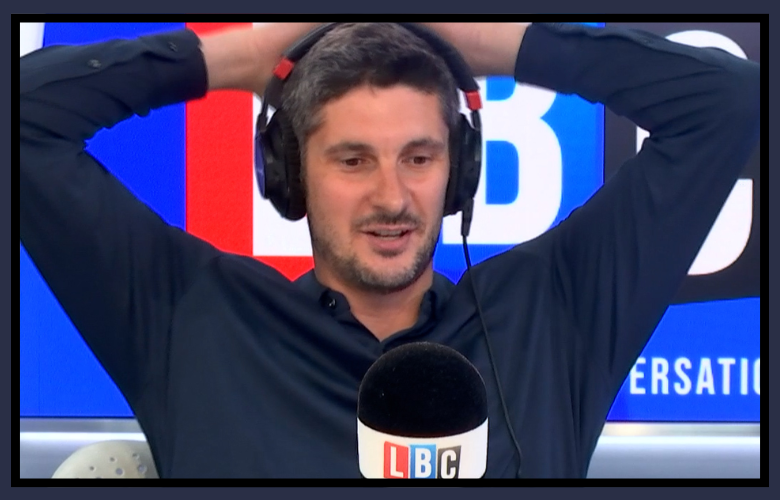
Tom Swarbrick is an English journalist and broadcaster who previously worked as a communications advisor in the British government. He is well-known as a presenter on LBC, where he talks about political matters, current affairs, public services, and national topics with politicians, specialists and listeners. What makes Swarbrick’s professional background unique is that he has gone through political communication from both the inside and outside. He started out as a journalist and later worked at 10 Downing Street under Prime Minister Theresa May. Returning back to broadcasting after leaving the government, he got new insight into politics and media interviews. Public curiosity in his age, wife, political beliefs, TV appearances, ethnic origin, and wealth grows steadily.
Tom Swarbrick Age, Education and Early Life
Tom Swarbrick was born on 30 March 1987, which makes him 39 years old in 2026. He grew up in Oxfordshire and attended Abingdon School, where he completed his early education. His background in Oxfordshire later became part of the story of his move into journalism and broadcasting.
He went on to study Theology at the University of Cambridge. His degree was not directly linked to journalism, but it involved examining ideas, comparing different arguments and looking closely at evidence. These skills can be useful in journalism because reporters often need to understand difficult subjects before explaining them to a wider audience.
Swarbrick did not follow a traditional route from university into a single specialist profession. Instead, he moved towards broadcasting and developed his experience through practical journalism. His early work helped him learn how to research stories, speak to different people and explain complicated subjects in a way that listeners could understand.
Tom Swarbrick’s Early Journalism Career
Swarbrick began his broadcasting career with BBC local radio. Local radio can provide broad experience because journalists may have to cover many different subjects in a short period. A single working day can involve politics, transport, health, education, crime, business and community stories.
This type of work can help journalists develop strong reporting habits. They must find information quickly, speak to people involved in a story and decide which details matter most. They also need to explain events clearly to listeners who may know little about the subject.
His early BBC experience gave him a useful foundation for national broadcasting. It helped him understand how news affects ordinary people and how local stories can connect with wider political issues. These skills later became important as his career moved towards national politics and live radio.
Tom Swarbrick and LBC
Swarbrick joined LBC in 2012 and became increasingly well known as a political journalist. LBC’s talk-radio format gave him the chance to cover politics while also speaking directly with listeners. His work involved major political stories and issues that affected the wider public.
He later became Chief Correspondent, a role that reflected his growing experience in political journalism. Political correspondents need to follow developments in Westminster while also understanding the wider effect of government decisions. They must often work under pressure because political stories can change very quickly.
His years at LBC also helped him develop as an interviewer and broadcaster. Radio requires a presenter to listen carefully, ask useful follow-up questions and keep a conversation moving. These skills became even more valuable when he later moved into government communications and then returned to radio.
Tom Swarbrick’s Move to Downing Street
A major turning point came in 2016, when Swarbrick left LBC and joined 10 Downing Street. He became Head of Broadcast during Theresa May’s premiership. The move took him from reporting on government to working inside the government communications operation.
His time in Downing Street came during a major period in British politics. The government was dealing with the result of the 2016 EU referendum, the early stages of Brexit and the political challenges that followed. The period also included the 2017 general election and major debates about the future direction of the country.
Working in government gave Swarbrick a different view of political communication. Instead of asking questions from the journalist’s side, he was involved in helping prepare political messages and senior figures for media appearances. This experience later became an important part of his professional background.
His Role as Head of Broadcast
As Head of Broadcast, Swarbrick worked within the government’s communications structure. Broadcast advisers help political figures prepare for television and radio interviews. They need to understand the likely questions, the key facts and the main messages that a politician wants to communicate.
The work can involve preparing ministers for difficult interviews. A political figure may need to explain a new policy while also responding to criticism, opposition arguments or unexpected questions. Good preparation can help an interviewee remain focused while dealing with pressure.
Swarbrick’s journalism background would also have given him knowledge of how broadcasters approach interviews. He had previously worked on the other side of political reporting. Moving into government therefore allowed him to understand political communication from a new perspective.
Tom Swarbrick’s Career in Brief
The main stages of Swarbrick’s professional career can be summarised as follows:
- Early broadcasting work in BBC local radio.
- Joining LBC in 2012 and developing as a political journalist.
- Becoming LBC’s Chief Correspondent.
- Joining 10 Downing Street as Head of Broadcast in 2016.
- Working during Theresa May’s premiership and the early Brexit period.
- Leaving government and returning to LBC in 2018.
- Continuing his career as a political and current-affairs broadcaster.
This career path shows why Swarbrick has a different background from many radio presenters. He has worked as both a journalist and a government communications adviser. Each role exposed him to a different part of the political news process.
His career also shows how journalism skills can transfer into political communications and back into broadcasting. Reporting requires questioning and checking information. Government communications requires planning and message control. Radio presenting requires both skills, along with the ability to communicate clearly in real time.
Return to LBC
Swarbrick returned to LBC in 2018 after leaving government. His return marked a move back from political communications to journalism and broadcasting. However, his time in Downing Street had given him experience that he had not possessed when he first joined the station.
He had seen how government teams prepare politicians for media interviews. He understood the importance of key messages and knew how political figures can use prepared answers when facing difficult questions. This experience can help a broadcaster recognise when an interviewee has not directly answered a question.
His return to LBC also allowed him to combine his previous journalism experience with his knowledge of government communications. Political interviews can involve complicated subjects, but a skilled presenter can break them into simple questions. This can help listeners understand both the political argument and its practical effects.
Tom Swarbrick as a Political Broadcaster
Political broadcasting requires more than simply knowing the names of politicians and political parties. A presenter needs to understand policies, follow breaking developments and identify the main questions that matter to the public. Swarbrick’s background has given him experience in each of these areas.
His interviews often involve subjects such as government spending, taxation, healthcare, immigration, elections and public services. These issues can be difficult because they involve competing interests and different political opinions. A good interview needs to explore the details rather than focus only on political slogans.
His work also involves conversations with members of the public. Callers can explain how political decisions affect their work, families or businesses. These personal experiences can add another side to a political debate, although they should still be considered alongside wider evidence and reliable statistics.
Frequently Asked Questions
How old is Tom Swarbrick?
He was born on 30 March 1987, which makes him 39 years old in 2026. His broadcasting career has developed across BBC radio, LBC and political communications.
Is he married?
Yes, public biographical information describes him as married and a father. However, he keeps details about his wife, children and wider family life relatively private.
What does he do today?
He is best known as an LBC radio presenter covering British politics, current affairs, breaking news and major national issues through interviews, analysis and listener discussions.
Did he work for Theresa May?
Yes. He worked at 10 Downing Street as Head of Broadcast during Theresa May’s premiership before leaving government and returning to LBC in 2018.
What are his political views?
He frequently discusses British politics, but there is not enough reliable public evidence to assign him a specific personal political ideology or definite party affiliation.
Conclusion
Overall, Swarbrick has made a unique career for himself through journalism, government communications and national radio. The work he did in the BBC and LBC honed his skills in journalism, whereas his period at 10 Downing Street helped him learn about political communication. After coming back to the world of broadcasting, Swarbrick was able to use his experience to enhance his interviewing, discussion and analysis. He will continue to be relevant to those people who have an interest in British politics and current affairs. Instead of making baseless assertions about his finances, ethnicity and family life, it is better for readers to know about his professional career.