Whether to go with a kayak or a canoe is among the most frequent choices that need to be made by anyone into water-based activities, adventures outdoors or leisurely trips along lakes or rivers. The two types of boats may appear very much alike initially, but there is a whole world of difference when you consider aspects such as design, paddling technique, speed, and comfort. While a kayak is designed for speed and agility, a canoe prioritizes volume, stability, and accessibility. Knowing how they differ is useful in choosing the correct boat for your purposes.
What is the Difference Between Kayak and Canoe?
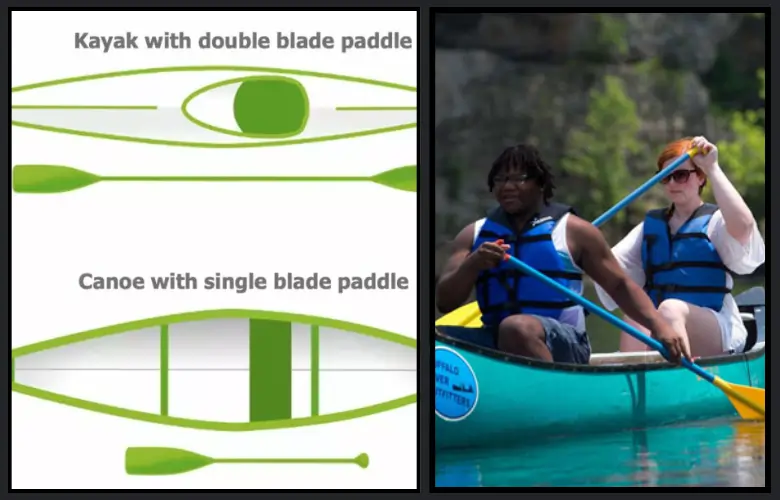
A kayak is a narrow and streamlined watercraft designed for one or two paddlers. The person sits low inside a cockpit with legs stretched forward. It uses a double-bladed paddle, which allows continuous movement on both sides without stopping. This design makes it efficient, fast, and suitable for covering long distances or navigating rough waters.
A canoe, on the other hand, is an open boat with higher sides and a wider structure. The paddler either kneels or sits on a bench inside the boat. It uses a single-bladed paddle, which requires switching sides or using steering techniques. Canoes are designed more for comfort, carrying equipment, and group travel rather than speed.
The key idea is simple: one focuses on performance and speed, while the other focuses on space and relaxation.
Design and Structure Differences
The structural design plays a major role in how each watercraft performs. Kayaks are built with a closed or semi-closed deck, which helps protect the paddler from water splashes and improves control in rough conditions. Their narrow shape reduces resistance in water, allowing them to move faster and cut through waves more efficiently.
Canoes are completely open from the top, making them easier to enter and exit. They have a wider body, which increases stability when stationary and provides more storage space for bags, fishing gear, or camping equipment. However, this open design also makes them more affected by wind.
Key design differences:
- Kayaks have a closed cockpit; canoes are open
- Kayaks are narrow and fast; canoes are wide and stable
- Kayaks sit lower in water; canoes sit higher
- Kayaks prioritize speed; canoes prioritize storage
For beginners, canoes often feel more comfortable at the start, while kayaks become more efficient with practice.
Paddle System and Control Technique
Paddle technique is another major difference. Kayaks use a double-bladed paddle, which allows continuous strokes on both sides without switching hands. This makes movement smoother, faster, and more energy-efficient.
Canoes use a single-bladed paddle, which requires switching sides or using steering techniques. This demands more coordination but creates a slower, more relaxed rhythm.
Paddle comparison list:
- Kayak paddle: double-bladed, alternating strokes
- Canoe paddle: single-bladed, side-switching required
- Kayak control: easier for straight movement
- Canoe control: requires steering skill and correction
Speed, Stability, and Water Performance
Speed is one of the biggest differences. Kayaks are generally faster because of their narrow shape and efficient paddle system. They are ideal for long-distance travel, river exploration, and ocean adventures.
Canoes are slower but offer better stability when stationary. However, they are more affected by wind due to their open structure.
Performance summary:
- Kayaks: faster, better in rough water, efficient for long trips
- Canoes: slower, more stable at rest, best for calm waters
- Kayaks burn more calories due to constant movement
- Canoes provide a more relaxed physical experience
Fishing and Outdoor Adventure Use
Fishing is one of the most popular use cases when comparing kayak vs canoe.
Fishing kayak advantages:
- Easy access to narrow fishing spots
- Better solo mobility
- Lightweight and maneuverable
- Designed for standing or seated casting
Canoe fishing advantages:
- More space for gear and coolers
- Suitable for two or more people
- Comfortable for long fishing sessions
- Stable in calm water environments
For camping trips, canoes are often preferred due to storage capacity, while kayaks are better for exploration.
Safety and Stability Considerations
Safety plays a major role in choosing between the two. Kayaks are stable while moving but harder to exit in emergencies due to their enclosed design.
Canoes are easier to enter and exit, making them beginner-friendly, but they require careful balance in wind or waves.
Safety checklist for both:
- Always wear a life jacket
- Start in calm water
- Avoid overloading the vessel
- Check weather conditions before use
Learning Curve and Ease of Use
The learning process is different for both.
Kayak learning:
- Easy to start moving
- Requires balance control
- Advanced skills improve efficiency
Canoe learning:
- Easy entry and seating
- Requires steering practice
- Takes time to master direction control
Beginners often find canoeing easier at first, while kayaking becomes more efficient with experience.
Environmental and Lifestyle Benefits
Both kayaking and canoeing are eco-friendly activities that require no fuel and produce zero emissions. They allow quiet interaction with nature and are excellent for wildlife observation.
They also support physical fitness and mental relaxation by encouraging outdoor activity and reducing stress levels. Kayaking suits adventure seekers, while canoeing suits people who prefer calm and slow-paced experiences.
(FAQs)
1. What is the main difference between kayak vs canoe?
The main difference is design and paddle type. Kayaks are closed boats with double-bladed paddles, while canoes are open boats with single-bladed paddles. Kayaks focus on speed and control, while canoes focus on comfort and space.
2. Which is easier for beginners?
Canoes are usually easier for beginners because they are more open and stable at rest. Kayaks require a bit more balance but become easier with practice.
3. Is a kayak faster than a canoe?
Yes, kayaks are generally faster due to their narrow shape and efficient paddling system.
4. Which is better for fishing?
Kayaks are better for solo fishing, while canoes are better for carrying gear and group fishing trips.
5. Can a kayak flip easily?
Kayaks are stable but can flip if used incorrectly or in rough water without experience.
Conclusion
In summary, there are distinct advantages associated with either a kayak or a canoe based on intended application and use. The differences between the kayak and the canoe reveal that the former is most appropriate for speed, adventure, and harsh water conditions whereas the latter is perfect for relaxation, storage capacity, and group activities. As such, neither option can be considered the best since each has its own strengths and applications. One has to make a decision depending on their expertise level and what they prefer.