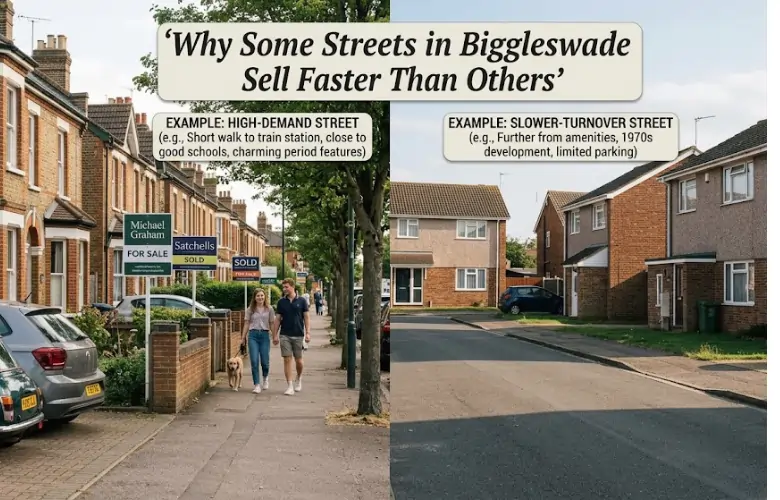
When analysing property performance, it’s easy to focus on price, property type or overall location. However, in Biggleswade, the reality is more nuanced, street-level factors often determine how quickly a home sells. Two similar properties within the same town can experience very different levels of demand depending on their immediate surroundings. For homeowners, landlords and investors, understanding these micro-level differences is key to making informed decisions.
Many sellers begin by working with professionals who understand street-level buyer behaviour, such as agents offering local market insight, ensuring pricing and positioning align with real demand patterns in Biggleswade.
Transport Proximity: A Major Demand Driver
Walkability to the station matters
One of the biggest factors influencing how quickly homes sell in Biggleswade is proximity to transport links. The town benefits from direct rail connections to London and easy access to the A1, making it highly attractive to commuters.
Properties within walking distance of the train station or key road routes tend to:
- Attract more enquiries from London commuters
- Sell faster due to higher demand
- Command stronger offers
However, there’s a balance, homes too close to busy roads or railway lines may take longer to sell due to noise concerns.
School Catchments and Family Demand
Location within school zones matters
Biggleswade is popular with families thanks to its range of well-regarded schools and three-tier education system.
Homes located within desirable catchment areas often:
- Generate more viewing requests
- Sell quicker than comparable properties
- Maintain stronger long-term value
Even a short distance difference between streets can influence buyer decisions significantly.
New Developments vs Established Streets
Buyer preferences vary by street type
Biggleswade has seen ongoing residential growth, with new developments attracting younger families and first-time buyers.
- New-build areas often sell quickly due to modern layouts and energy efficiency
- Established streets appeal to buyers looking for character, larger plots or quieter environments
However, not all new developments perform equally, streets closer to amenities or transport links typically outperform those on the outskirts.
Access to Amenities and Town Centre
Convenience drives faster sales
Properties located near Biggleswade’s high street, retail park and local amenities tend to attract broader buyer interest. The town offers a mix of independent shops, supermarkets and leisure facilities, all contributing to its appeal.
Homes in these areas often:
- Appeal to both families and professionals
- Benefit from higher footfall and visibility
- Sell more quickly due to lifestyle convenience
In contrast, properties further from amenities may take longer unless priced competitively.
Street Appeal and Surroundings
First impressions influence speed of sale
Beyond location, the feel of a street plays a major role. Buyers in Biggleswade often favour:
- Quiet residential roads or cul-de-sacs
- Well-maintained properties and surroundings
- Areas with a strong community atmosphere
Streets with consistent upkeep and visual appeal tend to perform better, even when property types are similar.
Property Type Concentration
Matching buyer demand
Some streets naturally attract faster sales because they align with current buyer demand. For example:
- Family homes near schools
- Starter homes close to transport links
- Riverside or character properties with unique appeal
Biggleswade’s varied housing mix, from period homes to modern developments, means demand can vary significantly between streets.
Investment Demand and Rental Appeal
Location impacts tenant interest
For landlords, certain streets perform better due to rental demand. Areas close to transport, schools and employment routes tend to attract reliable tenants.
This creates a secondary layer of demand, where investor interest helps properties sell faster in specific locations.
Why Street-Level Differences Matter in Biggleswade
Biggleswade’s property market is shaped not just by the town itself, but by the finer details of each neighbourhood. Transport access, school catchments, amenities and street appeal all influence how quickly a property attracts buyers and reaches completion.
For sellers, understanding these micro-location factors can help position a property more effectively. For buyers and investors, it highlights why two similar homes can perform very differently, simply because of the street they’re on.