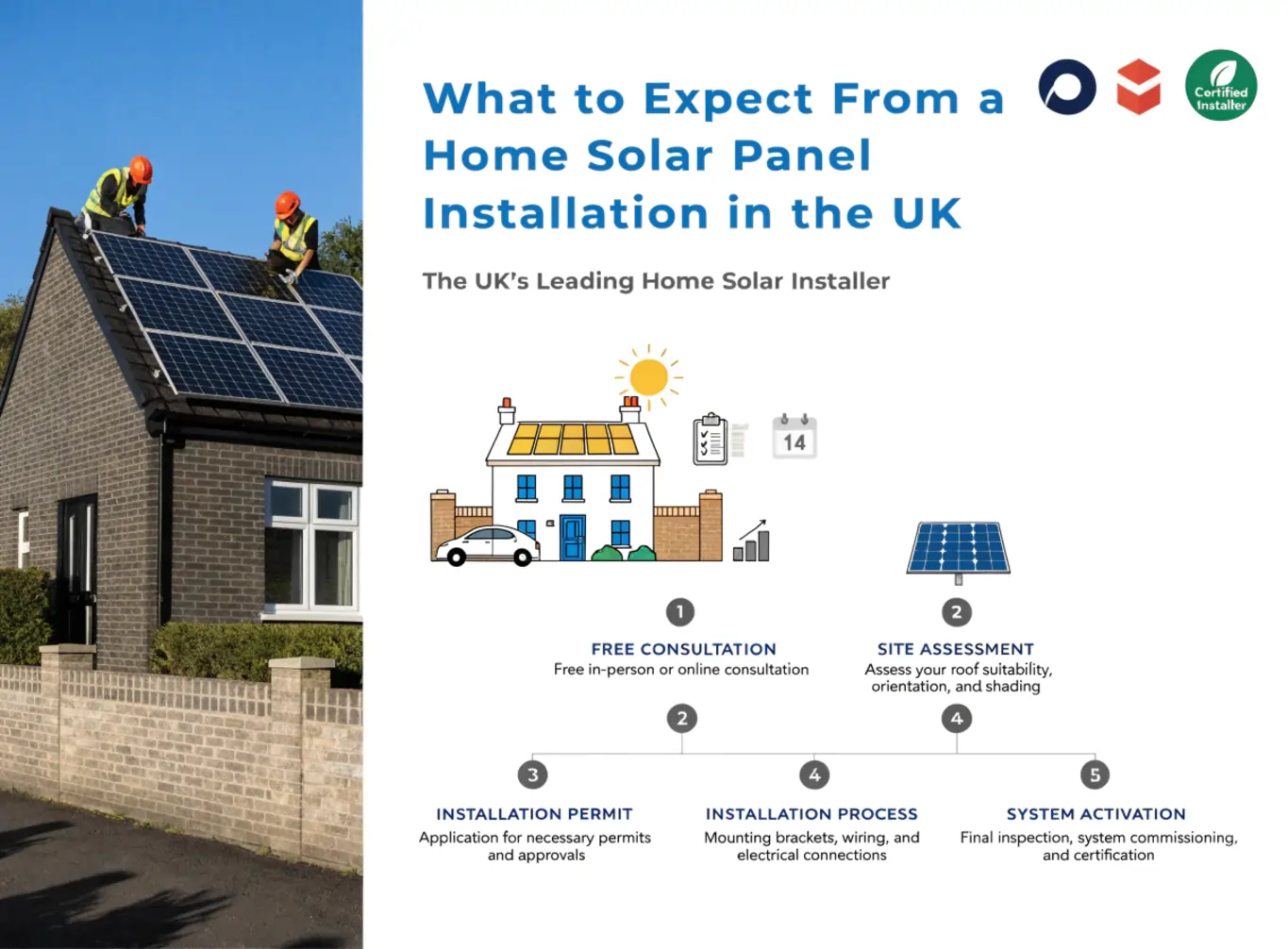
Thinking about using solar energy for your UK home? You may be wondering how the installation process works and what benefits you can realistically expect. As energy prices remain unpredictable and households look for ways to reduce both costs and carbon emissions, solar power has become an increasingly practical option rather than a niche upgrade.
A modern home solar panel installation is a structured, professional process. Installers assess your household energy needs, roof characteristics, and long-term goals before designing a system tailored to your property. When done properly, solar panels can significantly reduce reliance on grid electricity, improve energy efficiency, and increase your home’s long-term value.
Key Takeaways
- Solar panels offer long-term savings and carbon reduction for UK households.
- Installations are tailored to your roof, energy usage, and future needs.
- A professional assessment ensures safety, compliance, and performance.
- Solar can increase property appeal and value over time.
- Renewable energy adoption supports a more sustainable UK energy system.
The Rise of Solar Energy in UK Homes
Residential solar adoption across the UK has accelerated steadily over the past decade. Rising electricity costs, improved panel efficiency, and clearer government incentives have made solar energy a realistic option for many homeowners rather than an early-adopter technology.
Current Solar Adoption Trends in the UK
More than a million UK homes now generate their own electricity through solar panels. Improvements in panel efficiency mean modern systems produce more energy from less roof space, while installation costs have fallen significantly compared to earlier years.
Battery storage adoption has also increased, allowing households to store daytime generation for evening use rather than exporting all surplus energy.
Environmental and Economic Benefits
Solar energy reduces household carbon emissions by lowering dependence on fossil fuel-generated electricity. From a financial perspective, it lowers ongoing electricity bills and allows homeowners to generate value from surplus energy exported to the grid.
Well-designed solar systems can also enhance property value, particularly as energy efficiency becomes a more prominent consideration for buyers. Over the system’s lifespan, savings and export payments can deliver a strong return on investment.
Initial Assessment and Site Evaluation
Before any panels are installed, a detailed site assessment ensures your property is suitable and that the system will perform as expected. This stage is critical to long-term reliability and output.
Roof Suitability and Orientation
Roof characteristics play a major role in solar performance. Installers assess:
- Roof orientation, with south-facing roofs typically producing the highest output
- Shading from trees, chimneys, or nearby buildings
- Available surface area and roof pitch
East- and west-facing roofs can still deliver strong results, particularly when paired with battery storage. Even less-than-ideal roofs may remain viable with modern panel efficiencies and careful system design.
Solar Potential Analysis
A solar potential analysis estimates how much electricity your roof can generate over a full year, not just in peak summer conditions. Installers use historical weather data, roof geometry, and shading patterns to model realistic output figures.
This analysis helps avoid overestimating savings and ensures the system is sized to match actual household demand rather than theoretical maximum production.
Structural Considerations
Your roof structure must safely support the combined weight of panels, mounting rails, and fixings. Installers inspect roof condition, timbers, and fixings to confirm suitability.
If minor reinforcement or repairs are required, these are typically identified early, preventing safety issues and avoiding costly corrections after installation.
Planning and Design of Your Solar System
Once suitability is confirmed, the system design stage ensures your installation aligns with your energy usage patterns and future plans.
Determining Optimal System Size
System sizing is based on how much electricity your household uses, when it is used, and how much roof space is available. Installers analyse historic electricity bills to understand daily and seasonal consumption patterns.
Oversizing a system can lead to unnecessary export at lower SEG rates, while undersizing may limit savings. A balanced design focuses on maximising self-consumption while allowing room for future upgrades such as battery storage or EV charging.
Panel Types and Technology Options
Homeowners can choose from several panel types, including monocrystalline, polycrystalline, and thin-film options. Monocrystalline panels are commonly recommended for UK homes due to their higher efficiency and better performance in lower light conditions.
Panel selection may also consider warranty length, degradation rates, appearance, and manufacturer reputation, not just headline efficiency figures.
Integration with Existing Electrical Systems
Your solar system must integrate safely with your existing electrical infrastructure. This includes compatibility with your consumer unit, correct earthing arrangements, and appropriate safety isolators.
In some homes, minor electrical upgrades are required to meet current regulations and ensure safe long-term operation of the system.
The Modern Home Solar Panel Installation Process
Understanding the installation process helps set realistic expectations and reduces uncertainty on installation day.
Pre-Installation Preparations
Before installation begins, the installer completes final system design checks, orders equipment, and confirms grid notifications with your local distribution network operator if required.
You may also receive documentation outlining safety procedures, installation timelines, and what access is needed on the day.
Installation Day Timeline
Most residential installations are completed within one to two days, depending on system size and roof complexity. The process typically includes:
- Installing roof fixings and mounting rails
- Securing solar panels in position
- Installing the inverter and any battery components
- Connecting the system to your home’s electrics and testing operation
Installers aim to minimise disruption, with most work completed externally.
Equipment and Components Being Installed
A modern solar system consists of several integrated components designed to work together efficiently.
Panels, Inverters, and Mounting Systems
Solar panels generate direct current (DC) electricity, while the inverter converts it into usable alternating current (AC) for household use. Mounting systems are engineered to withstand wind loads and weather exposure over decades.
The quality of these components directly affects system reliability, efficiency, and long-term maintenance requirements.
Battery Storage Options
Battery storage systems allow surplus electricity generated during the day to be stored and used later, reducing reliance on grid electricity during evenings and peak-rate periods.
Batteries can also provide backup power during outages and support smarter energy management when combined with time-of-use tariffs.
UK Regulations and Permissions for Home Solar Panel Installation
Home solar panel installations in the UK must meet specific regulatory and safety requirements to ensure quality and consumer protection.
Planning Permission Requirements
Most domestic installations fall under permitted development rights, meaning planning permission is not usually required. Exceptions apply for listed buildings, conservation areas, or installations that significantly alter roof appearance.
Installers typically confirm planning status during the assessment stage to avoid delays or compliance issues.
Building Regulations Compliance
Building regulations ensure that installations meet safety standards for electrical systems, structural loading, and fire protection. Compliance is essential for insurance validity and resale considerations.
Certified installers handle building control notifications as part of the installation process.
MCS Certification and Approved Installers
Using an MCS-certified installer confirms that both the installer and equipment meet recognised industry standards. MCS certification is also required to access SEG payments and most finance options.
| Regulation | Description | Importance |
| Planning Permission | Required for certain properties such as listed buildings | High |
| Building Regulations | Covers electrical safety and structural integrity | High |
| MCS Certification | Confirms installer and system quality | High |
Costs, Financing, and UK Incentives
Understanding costs and incentives helps homeowners assess affordability and long-term value.
Average Installation Costs in the UK
A typical 4kW residential solar system costs between £4,000 and £8,000. Costs vary based on panel quality, roof access, inverter choice, and whether battery storage is included.
Higher-quality systems often deliver better long-term value through improved efficiency and longer warranties.
Smart Export Guarantee (SEG) Explained
The Smart Export Guarantee requires licensed electricity suppliers to pay homeowners for surplus electricity exported to the grid. Rates vary, so comparing suppliers can materially affect long-term returns.
SEG income complements bill savings rather than replacing them, making self-consumption the primary driver of value.
Financing Options and ROI Calculations
Homeowners can finance solar through outright purchase, loans, or leasing arrangements. When calculating return on investment, consider installation cost, electricity bill reductions, SEG income, and system lifespan rather than short-term payback alone.
Reduced VAT Benefits
Solar panel installations currently benefit from reduced VAT, lowering upfront costs and improving affordability for UK households.
| Financing Option | Initial Cost | Ongoing Savings | SEG Income |
| Outright Purchase | £6,000 | £300/year | £150/year |
| Loan | £0 upfront | £300/year | £150/year |
| Leasing | £0 upfront | £200/year | £0/year |
Post-Installation: Monitoring and System Management
Once installed, ongoing monitoring ensures your system continues to perform efficiently over its lifetime.
Smart Monitoring Systems
Smart monitoring systems provide real-time visibility into energy generation, household usage, and grid exports. This data allows homeowners to identify performance issues early and adjust usage habits to maximise savings.
Performance Optimisation Tips
Performance can be maintained by monitoring output trends, keeping panels clear of heavy debris, and addressing shading changes caused by tree growth or nearby developments.
Most systems require little intervention, but periodic checks help maintain expected output levels.
Integration with Home Energy Management
Integrating solar with broader home energy management systems allows intelligent control of batteries, heating systems, and flexible loads. This helps maximise self-consumption and supports participation in future smart tariff or demand-response schemes.
Conclusion: Making the Most of Your Solar Investment
Installing solar panels is both a financial and environmental decision. With the right system design, certified installers, and effective monitoring, solar can deliver consistent savings and long-term value.
By taking advantage of schemes such as the Smart Export Guarantee and reduced VAT, homeowners can improve affordability and returns. Smart monitoring and battery storage further enhance performance, helping you get the most from your investment while contributing to a lower-carbon energy future.
FAQ
What is the average lifespan of a solar panel system?
Most modern solar panels are designed to last 25 years or more, with manufacturers typically offering performance warranties of 20–25 years. While output gradually declines over time, this degradation is slow and predictable, meaning panels can continue generating electricity well beyond their warranty period. Inverters and batteries may require replacement sooner, but panels themselves are a long-term asset.
How much maintenance is required for solar panels?
Solar panels require very little ongoing maintenance because they have no moving parts. Occasional visual checks, basic cleaning to remove heavy dirt or debris, and periodic performance monitoring are usually sufficient. Most homeowners rely on monitoring software to flag any unexpected drops in output rather than carrying out regular manual inspections.
Can I install solar panels on a roof with shading issues?
Yes, solar panels can still be installed on roofs with partial shading, although shading does reduce overall output. Professional installers assess shading patterns throughout the day and year and may recommend system designs that use optimisers or micro-inverters to limit performance losses. In many cases, careful panel placement can significantly reduce the impact of shading.
How do I choose the right solar panel installer?
The most important factor is choosing an installer that is MCS-certified and experienced with properties similar to yours. Reviewing previous installations, asking about system design assumptions, and comparing proposals on performance rather than price alone helps ensure realistic expectations. Good installers will also explain limitations as clearly as benefits.
Are there any UK regulations or standards that solar panel installers must comply with?
Yes, solar installations must comply with UK building regulations, electrical safety standards, and the Microgeneration Certification Scheme (MCS). Installers should also be members of consumer protection bodies such as RECC. Compliance is essential for safety, insurance validity, resale considerations, and access to schemes like the Smart Export Guarantee.
Can I install a battery storage system with my solar panels?
Yes, battery storage can be installed alongside solar panels or added later if your needs change. Batteries allow you to store excess daytime generation for evening use, increasing self-consumption and reducing reliance on grid electricity. Many homeowners choose to add batteries once they have a clearer understanding of their usage patterns.