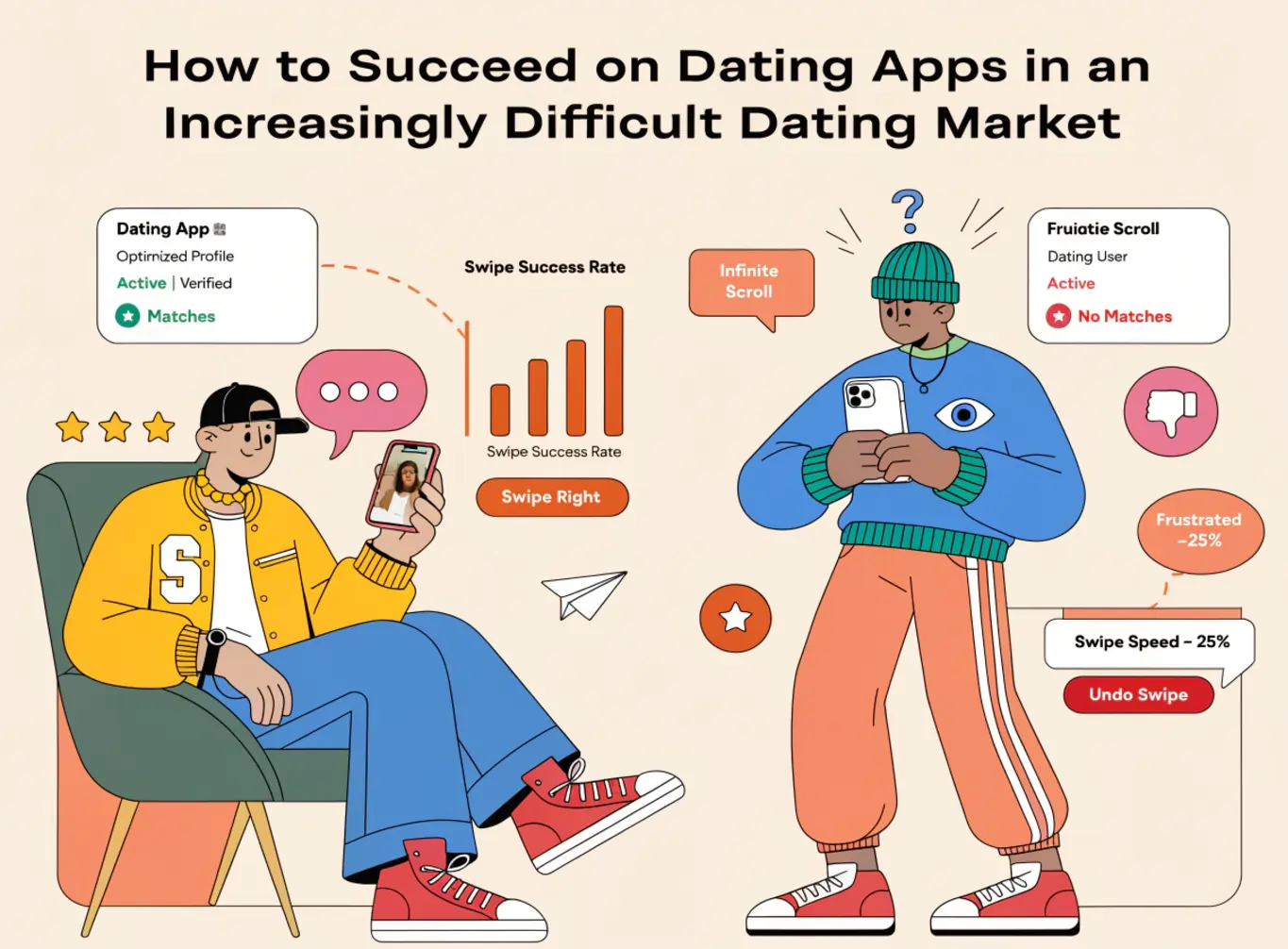
Most people who download dating apps do so with some version of the same thought: this will be easier than meeting someone at random. And for the first few swipes, it can feel that way. But the reality sets in fast. Conversations go nowhere. Matches pile up without producing a single real interaction. Weeks pass. The app becomes a chore you open out of habit and close out of frustration.
The problem is rarely that someone is undatable. The problem is that almost nobody treats their profile, their messages, or their time on these platforms with any kind of strategy. In today’s increasingly competitive online dating environment, small details make a noticeable difference. That is what separates people who meet someone from people who quietly delete the app after three months.
Your Photos Are Doing Most of the Talking
Your profile picture is the first and often only thing someone evaluates before deciding to swipe. Lighting, background, and facial expression all carry weight, and most people get this wrong by using blurry selfies, group shots where nobody can tell who the profile belongs to, or photos that are clearly five years old.
Profiles with four to six high-quality photos receive about 38% more matches than those with fewer images. That number says a lot about effort. A phone propped on a shelf with a timer and some natural light can get you better results than the bathroom mirror shot you have been recycling since 2021.
Include at least one full-body photo, one photo that shows you doing something you genuinely enjoy, and one close-up with a natural expression. Skip sunglasses in every frame. The goal is to make it easy for someone to understand what you look like and what kind of person you might be.
What the Numbers Say About Getting Replies
Nearly two-thirds of U.S. adults aged 18 to 29 have used a dating app, according to Pew Research, yet 78% of users report feeling mentally or emotionally exhausted by the process. The leading complaint is straightforward: about 40% say they cannot find a good connection.
Profiles on apps like Tinder with four to six high-quality photos receive significantly more matches, and research suggests that 85% of daters are more interested in continuing a conversation when thoughtful questions are involved. Crafting strong Tinder opening lines matters here because the first message often determines whether a conversation even begins.
Honesty has also become a clear expectation among younger users. Around 64% of young singles say emotional honesty is what dating needs most, while 60% want people to state their intentions upfront, a trend Tinder’s Year in Swipe report refers to as “Clear-Coding.” Meanwhile, 67% of Gen Z daters prefer building romantic connections without alcohol, according to Hinge’s D.A.T.E. Report, and many younger users are even open to AI tools that help improve conversations.
Across all of this data, one pattern stands out: people want authenticity, directness, and less pretense.
Stop Writing a Bio That Sounds Like Everyone Else’s
“I love hiking, tacos, and The Office” appears on countless profiles. It sounds harmless, but it says almost nothing about who you are. A bio should give someone a reason to start a conversation with you, and generic interests rarely accomplish that.
Write something specific instead. If you cook, say what you cook and why you enjoy it. If you read often, mention the last book that stuck with you. A single concrete detail is more effective than listing ten vague hobbies because it gives the other person something real to respond to.
Think of your bio as the second filter after your photos. Someone may already find you visually interesting. Now they need a reason to start typing.
The First Message Matters More Than You Think
Sending “hey” or “what’s up” is the conversational equivalent of a dead end. It puts the entire burden on the other person to create something interesting out of nothing.
Reading someone’s profile and referencing something specific instantly improves your chances of getting a reply. Ask about a photo they posted, comment on a hobby they mentioned, or ask a simple question tied to something they wrote.
This is straightforward advice, yet very few people consistently do it. That is exactly why it works.
Say What You Want Early
Around 60% of young singles say they prefer people to state their intentions early in the conversation. That number alone challenges the idea that ambiguity or “playing it cool” leads to better results.
If you are looking for a relationship, say it. If you prefer something casual, say that too. Being honest about what you want helps filter out mismatched expectations and makes conversations more productive.
You are not trying to match with everyone. You are trying to match with the right person.
Move the Conversation Off the App
Long stretches of messaging inside a dating app often lose momentum. Replies slow down, interest fades, and both people move on before meeting in real life.
Once a conversation feels comfortable and both people seem engaged, suggesting a simple plan can help maintain momentum. A coffee shop, a short walk, or a casual weeknight dinner are all reasonable first meetings.
Because many younger daters prefer alcohol-free dates, low-pressure environments often work well and help remove unnecessary social pressure.
Manage Your Own Energy
The exhaustion that many users report comes from treating dating apps like something that requires constant attention. Swiping endlessly every evening can lead to burnout.
Setting boundaries helps. Spending 15 to 20 minutes a day reviewing profiles, responding to messages, and sending a few thoughtful openers is usually enough. Anything beyond that often produces diminishing returns.
Taking breaks also helps. Deleting the app for a week or two does not mean you failed at online dating. It simply means you are managing your attention and avoiding burnout.
Treat It Like a Skill, Not a Lottery
People who do well on dating apps are not necessarily luckier than everyone else. They simply approach the process more intentionally. They write clearer bios, choose stronger photos, send better messages, and follow through when conversations show potential.
Every part of the process can improve with small adjustments. Treating dating apps like a skill that develops over time often produces better results than treating the experience like a random game of chance.
Conclusion
Success on dating apps rarely comes from luck alone. It usually comes from small improvements in how someone presents themselves, communicates, and manages their time on the platform. Clear photos, thoughtful bios, and genuine messages help people stand out in a crowded digital environment where attention is limited and first impressions matter.
At the same time, managing expectations and energy plays an equally important role. Dating apps can be effective tools for meeting people, but they work best when used intentionally rather than endlessly.
Approaching the process with patience, honesty, and a willingness to refine your approach often leads to better conversations and more meaningful connections. In a dating market that feels increasingly competitive, those small improvements can make a noticeable difference.
Frequently Asked Questions
How can I get more matches on dating apps?
Using four to six clear, high-quality photos, writing a specific bio, and maintaining an active but thoughtful presence on the app can significantly increase match rates.
What should I include in a dating app bio?
A good bio includes specific details about your interests, personality, or lifestyle. Mentioning something concrete gives others an easy way to start a conversation.
What is the best first message on a dating app?
The most effective opening messages reference something from the other person’s profile and include a simple question. This shows genuine interest and makes it easier to continue the conversation.
How long should you chat before meeting someone from a dating app?
Once a conversation feels natural and both people are engaged, suggesting a simple meeting—such as coffee or a walk—helps keep momentum and prevents conversations from fading online.