When a loved one is diagnosed with a serious, progressive, or life-limiting illness, families are suddenly introduced to a complex array of medical terms, care options, and clinical specialisms. Navigating this new healthcare landscape can feel overwhelming, especially when trying to make critical decisions under immense emotional stress.
Among the most common sources of confusion for families and patients alike is distinguishing between palliative care and end-of-life care. Because both philosophies focus heavily on comfort, dignity, and symptom management, the terms are frequently used interchangeably in casual conversation. However, conflating the two can lead to significant delays in seeking support, causing individuals to miss out on months of valuable clinical guidance and pain relief. Understanding the distinct timelines, goals, and operational differences between these two care pathways is vital to ensuring your loved one receives the exact level of support they need when they need it most.
Deconstructing Palliative Care: Support from Diagnosis Onward
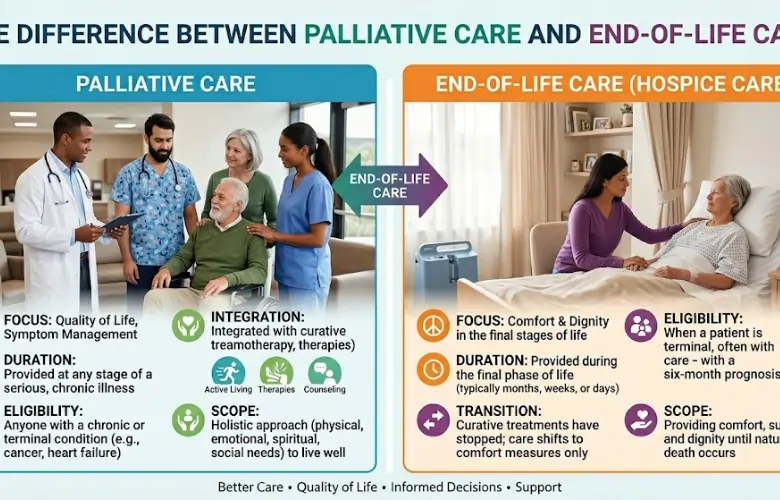
Palliative care is a comprehensive, multi-disciplinary medical specialty designed to optimize the quality of life for individuals living with serious, complex illnesses. The fundamental principle of this approach is to provide relief from the distressing physical symptoms, pain, and psychological stress of a condition, regardless of the patient’s current prognosis.
The defining characteristic of palliative care is its flexibility regarding timing and concurrent medical interventions. It can be introduced at the exact moment of diagnosis—whether a patient is facing advanced cancer, heart failure, respiratory disease, or a progressive neurological condition. Furthermore, choosing this pathway does not mean halting active treatments. A patient can seamlessly receive specialized symptom management while simultaneously undergoing aggressive therapies, such as chemotherapy, immunotherapy, complex surgeries, or intensive cardiac protocols. The primary objective is to build a protective layer of comfort around the patient so they have the physical energy and emotional resilience to withstand their ongoing clinical treatments.
Understanding End-of-Life Care: Comfort in the Final Phase
End-of-life care, by contrast, is a specific phase within the broader spectrum of palliative support. This pathway is intentionally reserved for patients who have reached the advanced, terminal stages of an illness, where curative treatments are either no longer effective or have been actively discontinued by choice because the burdens of therapy outweigh the benefits.
The primary operational focus of end-of-life care shifts entirely from managing long-term disease trajectories to ensuring absolute comfort, peace, and pain control during a person’s final months, weeks, or days. In this stage, medical interventions that cause discomfort or require stressful hospital visits are minimized or ceased. Instead, the care plan centers on intensive pain management, emotional grounding for the family, spiritual comfort, and maintaining the patient’s dignity as they prepare for a peaceful transition.
Mapping the Core Differences
To provide a clear overview for families evaluating these options, we can compare how these two frameworks operate across several key clinical metrics:
| Operational Metric | Palliative Care Pathway | End-of-Life Care Pathway |
| Eligibility Timing | Can begin immediately at the point of a serious, life-limiting diagnosis. | Initiated during the terminal stage of an illness, typically in the final months of life. |
| Treatment Interaction | Delivered alongside curative, active, or life-prolonging therapies. | Focuses purely on comfort; curative or aggressive medical treatments are stopped. |
| Primary Goal | To manage symptoms, clarify care goals, and maximize daily functional energy. | To manage the active dying process with absolute dignity, peace, and pain control. |
| Duration of Service | Can span several years depending on the progression of the underlying condition. | Focuses on a condensed timeline covering the final phase of life. |
Choosing the Right Care Setting: The Power of Home Comfort
As health needs shift, determining the physical setting where this specialized care is delivered becomes a priority for families. While both models can be provided within acute hospital settings or specialized nursing facilities, a vast majority of patients express a deep, enduring preference to remain in the comfort, privacy, and safety of their own homes.
Managing a serious or terminal condition within a rigid hospital ward often introduces unnecessary stress, clinical noise, and restrictive visiting hours that isolate patients from their closest relatives. Opting for a bespoke private palliative care at home service resolves this friction entirely. It allows families to bring elite clinical expertise, professional symptom control, and compassionate care coordinators directly into the family residence. Whether your loved one requires ongoing palliative support alongside their hospital treatments or intensive, round-the-clock comfort management in their final days, home-based care preserves their independent routines and surrounds them with familiar, loving memories.
Recognizing the Triggers for Professional Intervention
Understanding the technical differences between these pathways is only the first step; families must also recognize the real-world indicators that signal it is time to request a formal medical referral.
Indicators for a Palliative Referral:
• A recent diagnosis of a complex, progressive illness that requires coordination among multiple medical specialists.
• Persistent, unmanaged physical symptoms like severe chronic pain, breathlessness, nausea, or profound fatigue that interfere with daily life.
• Frequent, unplanned emergency room visits or hospital readmissions to manage the same underlying chronic condition.
• The need for structured family meetings to translate complex medical options into clear, value-driven decisions.
Indicators for an End-of-Life Care Referral:
• A clear clinical determination by medical professionals that curative treatment options have been exhausted or are no longer viable.
• A visible, rapid decline in the patient’s physical functional status, such as becoming permanently bedbound, experiencing extreme weight loss, or facing a significant decrease in mental alertness.
• The collective decision by the patient and family to shift the entire focus of care away from life-prolonging interventions and toward absolute peace, symptom suppression, and domestic comfort.
Conclusion: Empowering Your Care Journey with Clarity
The distinction between palliative care and end-of-life care ultimately centers on the concepts of timing and treatment alignment. Palliative care is an enduring companion designed to support a patient through the long, often unpredictable journey of a serious illness, working hand-in-hand with active treatment protocols to preserve vitality and hope. End-of-life care is the gentle, dedicated focus that steps in to guide a patient gracefully through their final chapter, ensuring that pain is held at bay and comfort is prioritized above all else.
By dismantling the misconceptions surrounding these care pathways, you empower your family to access specialized support at the optimal time. Rather than waiting until a medical crisis forces a sudden decision, discussing these options early with your healthcare provider ensures that your loved one’s physical, emotional, and spiritual well-being remains fully protected and optimized through every stage of their health journey.