Changes in vision are easy to underestimate, particularly when they develop gradually or do not cause pain. Some are related to relatively common conditions, while others can indicate changes affecting the cornea, natural lens, retina or optic nerve. For patients looking for an ophthalmologist in Abu Dhabi, knowing when an eye symptom deserves professional assessment can help avoid relying on assumptions or delaying an examination unnecessarily. Aziz Ophthalmology provides ophthalmic care at Harley Street Medical Center in Abu Dhabi, where Dr. Hassan Abdul Aziz evaluates patients with visual changes and a range of ocular conditions, including cataract and retinal disorders.
The important point is that symptoms alone rarely reveal their cause with certainty. Blurred vision, redness, discomfort or changes in visual quality can have several explanations, and the appropriate response depends on the eye examination and the way the symptom developed. Online searches and home remedies may temporarily reassure a patient, but they cannot replace a clinical diagnosis when a visual change is persistent, unexplained or sudden.
What eye symptoms should lead to an ophthalmology consultation?
Not every temporary visual disturbance indicates eye disease. Tiredness, prolonged screen use or temporary irritation may cause symptoms that improve quickly. The situation becomes different when a change persists, repeatedly returns or begins to interfere with normal activities such as reading, driving, working or recognising details at a distance.
Blurred or cloudy vision, increasing difficulty seeing at night, sensitivity to light, persistent redness, eye discomfort and changes in contrast can all justify further investigation depending on their severity and duration. A patient may also notice that one eye sees differently from the other, even though everyday binocular vision initially makes the difference less obvious. These changes should not automatically be attributed to age or the need for new glasses.
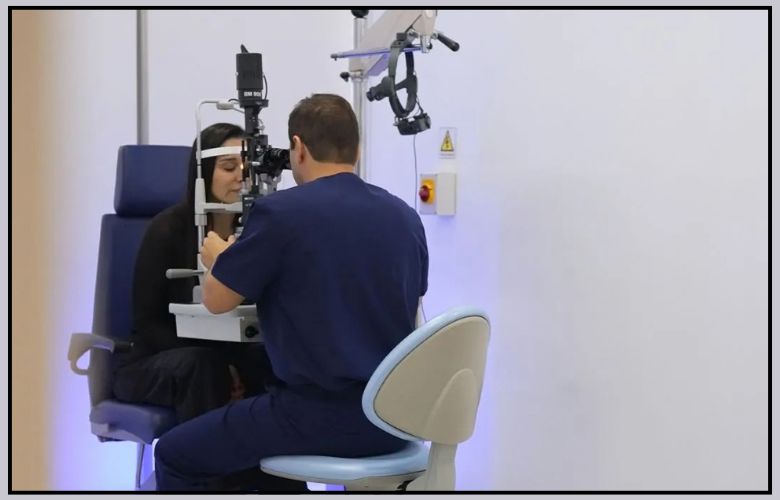
An ophthalmic assessment can determine which part of the visual system may be responsible. Examination may involve refraction, intraocular pressure, evaluation of the front and back of the eye and, when indicated, diagnostic imaging. The objective is not simply to confirm that vision has changed, but to understand why. This distinction determines whether a patient needs monitoring, optical correction, medical management or a different form of treatment.
Why should persistent blurred vision be investigated?
Blurred vision is one of the most common reasons people seek eye care, but it is also one of the least specific symptoms. It can occur because the eye no longer focuses light correctly, because the ocular surface is unstable or because changes have developed in structures such as the cornea, natural lens or retina. The same symptom can therefore have very different causes and require very different approaches.
The way the blurring develops provides useful information. A gradual loss of clarity over months may have a different explanation from vision that changes suddenly. Some patients notice greater difficulty at night, increased glare around lights or colours that seem less vivid. Others experience distortion, fluctuating clarity or a difference between central and peripheral vision. These details help guide the ophthalmologist, but they cannot establish a diagnosis on their own.
Simply changing glasses or repeatedly using lubricating drops without knowing the cause may postpone the appropriate evaluation. If blurred vision persists, changes noticeably or affects only one eye, a professional examination can identify whether the problem is refractive or related to ocular health. At Aziz Ophthalmology, assessment can be supported by diagnostic technologies selected according to the patient’s symptoms and clinical findings.
What do sudden changes in vision mean?
A sudden visual change should be approached differently from a symptom that has remained stable for months. Sudden loss or significant reduction of vision, a new dark area in the visual field or rapidly developing visual distortion can be associated with conditions requiring prompt medical attention. The speed at which a symptom appears can itself be clinically important.
New flashes or a sudden increase in floaters are another example. Floaters are common and may remain harmless for years, but a sudden change can sometimes occur when the vitreous gel inside the eye changes and pulls on the retina. In some cases this may be associated with a retinal tear or detachment. A new shadow or curtain across part of the visual field is particularly important and should not be watched at home while waiting to see whether it disappears.
Dr. Hassan Abdul Aziz has advanced training in vitreoretinal diseases and retinal surgery, and retinal evaluation forms an important part of his clinical activity. When symptoms suggest a possible problem at the back of the eye, timely examination can establish whether the retina is intact and whether treatment is required. Sudden or severe visual loss should be treated as a medical emergency rather than managed through online advice.
Why can eye pain or persistent redness require an examination?
Red eyes are common, and many episodes are associated with relatively minor irritation. The difficulty is that redness describes an appearance rather than a diagnosis. When it occurs together with significant pain, reduced vision or sensitivity to light, the combination may indicate a condition that requires more urgent assessment.
Pain can originate from different structures in and around the eye. Surface irritation may produce burning or a gritty sensation, while inflammation, infection, injury and certain forms of glaucoma can produce different patterns of discomfort. This is why using leftover medication or choosing eye drops solely on the basis of redness can be inappropriate. Some drops can mask symptoms without addressing the underlying cause.
Patients should pay particular attention when redness is intense, pain is significant or vision has changed. Sudden severe eye pain or sudden loss of vision requires urgent medical attention. An ophthalmologist can distinguish between conditions that look similar to the patient but require different management, using examination and appropriate diagnostic testing rather than appearance alone.
Why should patients avoid diagnosing eye problems at home?
The internet makes it possible to compare symptoms within seconds, but eye conditions often share similar signs. Redness may be associated with dryness or irritation, but it can also accompany inflammation or other conditions. Blurry vision can arise from a refractive problem, cataract, corneal changes or retinal disease. Matching one symptom to one online diagnosis can therefore create false reassurance or unnecessary alarm.
Home remedies create a similar problem when they are used instead of diagnosis. Repeatedly applying products that were not selected for the underlying condition may not address the cause, while using medication prescribed previously for a different episode can be inappropriate. Even symptoms that appear familiar may have a different explanation the second time they occur.
A safer approach is to observe the nature and timing of the symptom and seek professional assessment when it persists, worsens or appears suddenly. This is especially important for visual loss, severe pain, significant trauma or sudden changes in the visual field. Eye care should begin with identifying the cause before choosing the solution, rather than experimenting until a symptom improves.
Ophthalmologist in Abu Dhabi: when professional assessment matters
Knowing when to consult an ophthalmologist in Abu Dhabi means paying attention not only to whether a symptom exists, but also to how it begins, how long it lasts and whether it changes vision. Persistent blurring, progressive difficulty at night, unexplained differences between the eyes, significant pain or redness and sudden visual changes can all justify ophthalmic assessment. Some eye diseases may also progress without obvious early symptoms, making individual risk factors and previous ocular history relevant.
At Aziz Ophthalmology, Dr. Hassan Abdul Aziz sees patients at Harley Street Medical Center in Abu Dhabi, combining ophthalmic examination with diagnostic testing when clinically appropriate. His background includes advanced training in retinal diseases and ocular surgery, alongside the management of cataract and other visual conditions. For patients concerned about a new or persistent change in their eyesight, an assessment with Aziz Ophthalmology can help identify the cause and clarify the appropriate clinical pathway, avoiding self-diagnosis and treatments chosen without first understanding the condition of the eye.