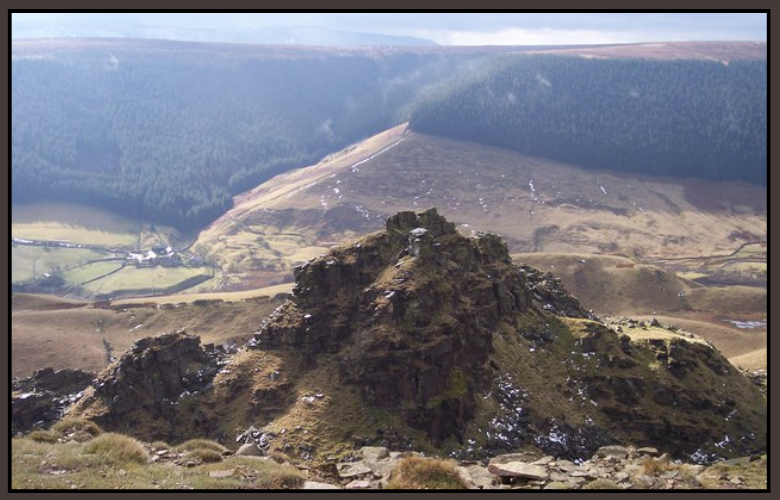
One of the most magnificent geological formations of the Peak District is the Alport Castles which draws people to walk through, photograph and have fun in the Alport Dale area in Derbyshire. Contrary to what the name suggests, there are no castles here; rather, it is a beautiful geological site which was formed due to a landslide. Gritstone boulders, crags, moors, and breathtaking scenery will leave you in awe and give you a chance to see beautiful vistas of the surroundings. It is perfect for those who enjoy walking, taking photographs, geology and other outdoors activities. You can choose between different paths like Fairholmes and have maps, weather forecasts at your disposal.
What Are Alport Castles and Where Is It?
The site is a dramatic collection of gritstone formations overlooking Alport Dale in the northern Peak District. Its unusual appearance was created by natural geological movement rather than human construction. A major landslip caused a large section of the hillside to move, leaving behind steep faces, rocky blocks and prominent formations. The Tower is one of the best-known features and is particularly impressive when viewed from the surrounding valley. From certain angles, the rocks resemble the towers and walls of a ruined fortress, which explains the unusual name.
The landscape is located within the Peak District National Park and is closely connected with the Upper Derwent Valley, Ladybower Reservoir and Fairholmes. The River Alport runs through the dale below the formations, while open moorland rises around the valley. This combination gives visitors much more than a single geological attraction. The walk provides changing scenery, from lower countryside to more exposed high ground, and clear days can offer extensive views across Derbyshire. For anyone interested in geology, the site also provides a practical example of how rock layers, erosion and landslips can shape Britain’s landscapes.
Alport Castles Walk, Route and Map
There are several ways to plan a walk to the formations, and the most suitable route depends on your fitness, walking experience and available time. Some visitors choose a more direct approach, while experienced walkers may prefer a longer circular route through Alport Dale and the surrounding hills. An itinerary from Fairholmes is another option for those exploring the Upper Derwent Valley. The important point is to consider the entire journey rather than simply the distance to the destination. Steep climbs, muddy paths, uneven ground and exposed sections can make a relatively short walk feel much more demanding.
An accurate map is useful for understanding the route before you start. Check the starting point, elevation, path junctions and expected walking time, and consider how the return journey will fit into the available daylight. An offline digital map is convenient, but a paper map can provide useful backup if your phone loses power or signal. Navigation becomes particularly important when fog or low clouds cover the higher ground. Rather than relying solely on visible landmarks, make sure you understand the route before conditions deteriorate. Good planning can make the difference between a relaxed countryside walk and an unnecessarily stressful day.
A sensible walking kit should include sturdy footwear, waterproof clothing, additional warm layers, enough food and water, reliable navigation equipment and a fully charged phone. Walking poles can also be useful on steep or muddy sections. Allow extra time for photographs and rest stops, particularly if you are visiting with children or a group with different walking abilities.
Alport Castles From Fairholmes and Photography Opportunities
Walking from Fairholmes can turn a visit into a wider exploration of the Upper Derwent Valley. Fairholmes is an established starting area for walks around the Ladybower Reservoir and surrounding countryside, making it useful for visitors who want a longer outdoor itinerary. As you move away from the lower valley, the scenery gradually becomes more open and exposed. The changing landscape gives the journey its own appeal, with hills, valleys and moorland appearing alongside the main geological formations.
The route also creates plenty of opportunities for photography. The dramatic rocks provide a strong foreground, while the valley and distant hills give photographs depth and scale. Alport Castles photos can look very different depending on the viewpoint, season and weather, so there is no need to take every photograph from the same location. Early morning and late afternoon light can highlight the texture of the gritstone, while mist can create a dramatic atmosphere by hiding parts of the surrounding landscape. A smartphone is more than adequate for most visitors.
Safety should remain the priority when taking photographs. Avoid stepping close to cliff edges or climbing rocks simply to obtain a more impressive image. Wet gritstone and muddy slopes can become slippery, and strong winds can affect balance on exposed ground. The best photographs often come from stepping back and including the surrounding valley rather than moving dangerously close to the formations. Patience, changing viewpoints and good natural light are usually more valuable than specialist camera equipment.
Camping and Wild Camping Near the Area
Camping can be a good option for visitors who want to spend several days exploring the Peak District. Rather than rushing through a day trip, staying nearby gives you more opportunities to walk at different times of day and experience changing light and weather. When researching camping options, check authorised campsites in the wider area and confirm their opening periods, facilities, booking requirements and parking arrangements. An established campsite is generally the simplest choice for families and visitors who want dependable facilities after spending a day outdoors.
Searches for an Alport Castles wild camp are common among experienced outdoor enthusiasts, but wild camping in England should not be treated as automatically permitted. The fact that an area is remote or appears unused does not mean visitors have unrestricted permission to pitch tents. Landowner permission and any relevant local restrictions need to be considered before planning an overnight stay. Visitors should check current rules rather than relying on outdated online advice or informal recommendations.
Responsible camping is particularly important in a national park. Campers should avoid damaging vegetation, disturbing livestock or wildlife, leaving litter or creating unnecessary noise. Fires should only be used where they are permitted and safe, and visitors should leave the area clean and undamaged. If permission for wild camping cannot be obtained, an authorised campsite provides a straightforward alternative without creating uncertainty about access.
Alport Castles Weather, Safety and Best Time to Visit
Weather can have a significant impact on the walking experience because the surrounding countryside is exposed. Rain can make paths muddy and slippery, while strong winds can make higher sections uncomfortable. Mist and low clouds can reduce visibility and make navigation more difficult, particularly for visitors unfamiliar with the landscape. Checking the Alport Castles weather forecast before setting out is therefore an essential part of preparation. Conditions can also differ between sheltered valleys and higher ground, so walkers should be ready for changes during the route.
Late spring, summer and early autumn are generally convenient periods because longer daylight provides more flexibility. Summer can offer excellent views, although popular weekends may be busy. Autumn is particularly attractive for photographers because of changing colours and softer seasonal light. Winter can produce spectacular scenery but requires greater experience and preparation due to shorter days, ice, snow, cold temperatures and stronger winds. A route that feels straightforward during summer can become much more challenging in winter conditions.
Safety should always take priority over completing a planned itinerary. Wear suitable footwear, carry waterproof and warm clothing, keep away from steep edges and avoid climbing unstable rock formations. If visibility becomes poor or weather conditions deteriorate, turning around is a sensible decision. Anyone walking alone should tell another person their intended route and expected return time. Dog owners should keep animals under control around livestock and wildlife, while all visitors should follow countryside access guidance and take litter home.
Why Visit and Is It Worth It?
The biggest attraction is the combination of unusual geology and dramatic Peak District scenery. The formations create a clear destination for a walk, but the surrounding valley and moorland make the journey equally worthwhile. Visitors interested in natural history can learn about landslips, erosion and the relationship between different rock layers, while photographers can experiment with viewpoints and changing light. Walkers can also adapt the experience to their abilities by choosing a shorter approach or a longer circular itinerary.
The area can easily become part of a broader Derbyshire adventure. Visitors can combine their walk with time around Fairholmes, Ladybower Reservoir and the Upper Derwent Valley, creating a fuller day outdoors. Families with older children may particularly enjoy the geological story because they can see natural processes represented in the landscape rather than simply reading about them. The main disadvantages are the exposed terrain, changeable weather, muddy paths and limited facilities directly at the formations. This is a countryside destination, not a conventional attraction with indoor facilities.
For people who enjoy walking, photography and natural landscapes, the benefits generally outweigh the limitations. The combination of dramatic rocks, open valleys and geological interest provides a more rewarding experience than a quick viewpoint stop. Visitors should simply approach the area with realistic expectations and good preparation. Choose a suitable route, check the forecast, carry navigation equipment and allow enough time to return safely. Done properly, the visit can be one of the most memorable outdoor experiences in the northern Peak District.
- Also Read. John Bishop Wife: Who Is Melanie Bishop?
Frequently Asked Questions
1. What are Alport Castles?
It is a spectacular natural geological formation in the Peak District, Derbyshire. Despite its name, there is no medieval castle at the site. The unusual gritstone cliffs and rocky towers were created by natural geological processes and a major landslip.
2. How long is the walk?
The walking distance depends on your chosen starting point and route. There are shorter approaches as well as longer circular walks through Alport Dale and the surrounding countryside. Check the route distance, elevation and terrain before setting off.
3. Can you walk there from Fairholmes?
Yes, Fairholmes can be used as a starting point for a longer Peak District walking itinerary. The exact distance and difficulty depend on the route you choose, so checking a detailed map before your trip is recommended.
4. Is it suitable for beginners?
Some routes can be suitable for reasonably fit beginners, but the terrain should not be underestimated. Muddy paths, steep sections, uneven ground and changing weather can increase the difficulty. Beginners should choose a manageable route and allow plenty of time.
5. Can you go camping nearby?
There are authorised campsites in the wider Peak District where visitors can stay while exploring the area. Facilities and booking requirements vary, so check the rules of your chosen campsite before travelling.
Conclusion
Alport Castles provides a great peak district experience as it features impressive gritstone formations and geology together with great views of the area of Alport Dale. This place can serve as a great place for walking and photography as well as for those who love British nature in general. The selection of a correct route, the check of the weather, and the possession of the appropriate walking equipment will definitely make this experience much safer and interesting. People who start their visit to this area from Fairholmes may take the opportunity of going through the whole countryside area and take photos of the impressive rock formations. The idea of camping may also be taken into account, but in this case one should take into account the rules of wild camping.