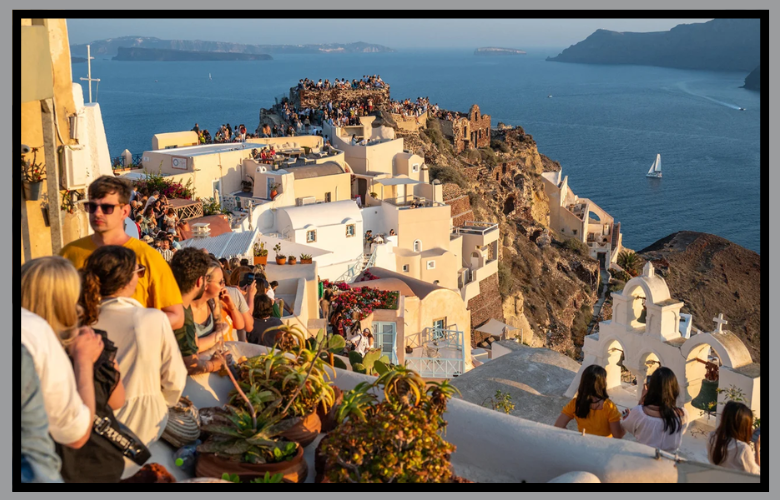
Santorini has traditionally been among the most famous holiday spots in Greece, with its whitewashed villages, blue domes, volcanic scenery, and memorable sunsets. Nevertheless, new trends in travelling, risks of earthquakes, high costs, and congestion are currently influencing the number of tourists who visit Santorini. The decrease poses difficult challenges for hotels, local businesses, seasonal workers, and the communities whose economy depends on tourism revenue. Meanwhile, the decrease of tourists provides an opportunity for decreasing the strain on the infrastructure and resources. Analyzing the reasons behind the decline in tourism can help tourists prepare better trips and understand how Santorini can sustain its economy and uniqueness for generations to come.
Understanding What Is Happening to Tourism in Santorini
The recent slowdown does not mean that Santorini has become empty or irrelevant. The island remains one of the best-known destinations in Greece and still attracts large numbers of visitors each year. However, airport traffic, international bookings and hotel occupancy have not always matched the record levels seen before the disruption of 2025. This is important because travellers arriving by air usually stay for several nights, pay for accommodation and spend money across a wider range of local businesses. A decline in overnight guests can therefore have a greater economic effect than a similar change in short cruise visits.
Visitor numbers also vary by location and time of day. Oia can remain extremely busy at sunset even when hotels elsewhere report weaker bookings. Fira may feel crowded when several cruise ships arrive, while restaurants in quieter villages may experience reduced footfall. This explains why photographs of busy streets do not always show the complete economic picture. The island can face overcrowding in a few famous places while also dealing with lower revenue, shorter stays and reduced demand in other areas.
The wider Greek tourism industry may continue growing while Santorini performs differently. Travellers now have more information, more destinations to compare and more control over their bookings. They can choose Naxos, Paros, Milos, Crete or Rhodes when they want lower prices, larger beaches or less congestion. Santorini therefore competes not only on beauty but also on value, convenience, safety and the quality of the complete visitor experience.
Why Visitor Numbers and International Demand Have Weakened
Earthquake concerns were one of the most immediate reasons for weaker confidence. A period of unusual seismic activity near Santorini and neighbouring islands created international headlines, emergency preparations and uncertainty among travellers. Even when hotels, restaurants and attractions remained operational, some visitors postponed their plans or selected another destination. Couples arranging weddings or honeymoons were especially cautious because these trips require advance payments, fixed dates and careful coordination with venues, airlines and accommodation providers.
Perceived danger can influence tourism even when the actual risk is being closely monitored. Most travellers are not experts in geology, so they may struggle to understand the difference between normal seismic activity, an earthquake swarm and signs of volcanic danger. Dramatic social media posts can make the situation appear more severe than official guidance suggests. Once uncertainty spreads during the main booking period, the effect may continue for months because airlines, tour operators and hotels make seasonal decisions well in advance.
High prices have also weakened demand. Santorini is one of the most expensive Greek islands, particularly in Oia, Imerovigli and properties overlooking the caldera. Travellers may accept premium rates when they receive privacy, exceptional service and a memorable view. They are less satisfied when high prices come with traffic, queues, crowded pathways or rushed service. As household travel budgets become more carefully managed, visitors increasingly compare the total cost of flights, hotels, meals and activities with the experience available on other islands.
Santorini Overtourism and the Overcrowded Santorini Reality
Santorini overtourism became a major issue long before visitor numbers began to weaken. The island has a small permanent population, limited road space and a fragile volcanic landscape, yet it has received millions of annual visitors. During the busiest months, narrow streets in Oia and Fira can become packed with tour groups, photographers and day visitors. Public spaces designed for local communities must handle far more people than they were originally built to support.
The overcrowded Santorini reality is often very different from the calm images used in travel advertising. Visitors may see a photograph of one person standing beside a blue-domed church, but the surrounding area can contain long queues waiting to capture the same view. Sunset locations may become difficult to move through, while transport routes fill with coaches, rental cars, taxis and hotel transfers. Travellers who expect a peaceful and exclusive experience may feel disappointed when the island seems rushed and congested.
Overcrowding also affects residents and workers. Heavy tourism demand increases pressure on water, electricity, waste collection, housing and roads. Long-term homes may be converted into short-term rentals because holiday accommodation produces higher returns. Seasonal workers can then struggle to find affordable rooms near their workplaces. Tourism remains essential to the island, but uncontrolled volume can reduce quality of life and damage the visitor experience. A smaller, better-managed flow of travellers may create more value than unlimited daily arrivals concentrated in the same villages.
Revenue Pressure, Mykonos Comparisons and Greece Tourism Protests
The Santorini tourism revenue decline is difficult to measure through one figure because airport arrivals, ferry passengers, cruise visits and business income are recorded separately. However, weaker overnight demand can affect a wide range of local businesses. Hotels still pay for maintenance, insurance, utilities and staff when rooms remain empty. Restaurants must purchase supplies before knowing how busy a week will be. Wedding planners, photographers, drivers, guides and boat operators may lose significant income when international visitors cancel or shorten their stays.
Reports that Santorini and Mykonos see significant drop in international tourists reflect a broader change in the premium Greek island market. Both destinations are famous, expensive and strongly dependent on seasonal foreign arrivals. Travellers now compare them with islands that provide more space, lower costs or a less commercial atmosphere. Naxos may appeal to families, Milos to travellers seeking dramatic beaches and Crete to visitors who want a wider mix of history, food and activities. Santorini and Mykonos remain powerful brands, but recognition alone no longer guarantees steady growth.
Greece tourism protests also show that residents in heavily visited areas want a fairer balance between tourism and daily life. These movements are not always against visitors themselves. They often focus on housing costs, beach access, crowded public spaces, low seasonal wages and pressure on local services. Santorini can respond by controlling cruise schedules, protecting residential areas, limiting unsuitable development and using tourism-related revenue to improve transport, water systems and waste management. Sustainable policies can protect the economy while reducing frustration among permanent communities.
Benefits, Drawbacks and Real-Life Effects of the Slowdown
A moderate reduction in visitor numbers can create real benefits. Couples may find it easier to reserve restaurants, enjoy viewpoints and take photographs without severe congestion. Families can move between villages with fewer transport delays. Hotel and restaurant staff may provide more personal service when they are not overwhelmed by sudden peaks in demand. Archaeological sites, vineyards and walking routes can also feel more enjoyable when visitors are spread across the island rather than concentrated in one place.
The slowdown also carries serious disadvantages. Local businesses depend on a short summer season to generate much of their annual income. A weak June, July or August can affect loan payments, renovations and staffing decisions. Seasonal workers may receive fewer hours, shorter contracts or less income from tips. Airlines may reduce direct services when bookings fall, making the island more difficult or expensive to reach. If the decline continues for too long, some family-run businesses may close or reduce the quality of their services.
The main effects can be summarised as follows:
- Less pressure on roads, viewpoints, buses and public spaces.
- Shorter queues in Oia, Fira and around the old port.
- Better opportunities for quieter photography and sightseeing.
- Possible hotel discounts outside the busiest weeks.
- Lower income for hotels, restaurants and tour operators.
- Reduced employment and fewer working hours for seasonal staff.
- Possible cuts to direct international flights.
- Greater financial pressure on small local businesses.
Real-life experiences differ according to the type of traveller. A honeymoon couple staying five nights may benefit from better room availability and quieter restaurants. A family visiting in May may enjoy comfortable weather and easier transport. A cruise passenger may face shorter queues but still have limited time on the island. A slow traveller staying in Pyrgos or Megalochori may support businesses outside the main caldera route and experience a more traditional side of local life.
Is Santorini, Greece, Still Worth Visiting? Map, Weather and Planning
Santorini, Greece, remains worth visiting for travellers who value volcanic scenery, historic sites, local wine, cliffside architecture and romantic accommodation. The island offers more than Oia’s sunset. Visitors can explore the ancient settlement of Akrotiri, walk between Fira and Oia, take a caldera boat trip, visit traditional vineyards and discover villages such as Pyrgos, Emporio and Megalochori. Travellers who look beyond the most photographed locations usually gain a deeper and more satisfying understanding of the island.
A reliable Santorini map is essential when choosing accommodation. Oia is famous for sunsets and luxury hotels, but it is farther from the airport and ferry port. Fira offers central transport connections, restaurants and nightlife. Imerovigli provides quieter caldera views, while Kamari and Perissa suit travellers who prefer easier beach access. Distances may appear short, but traffic, steep roads and limited parking can increase travel time. Some cliffside hotels also require guests to walk down many steps, so access should be checked before booking.
Santorini weather strongly affects prices and crowd levels. July and August are usually hot, dry and busy, while May, early June, late September and October often provide more comfortable sightseeing conditions. Strong Aegean winds can occasionally disrupt ferry or boat schedules, so flexibility is useful. Travellers can improve their trip by staying for at least three or four nights, avoiding the busiest sunset hours and exploring different villages. Shoulder-season travel usually offers a better balance of weather, availability, value and crowd control.
Frequently Asked Questions
What Is Causing the Santorini Tourism Decline?
Earthquake concerns, high prices, overcrowding and fewer international flights have reduced demand. Competition from more affordable Greek islands has also influenced travellers.
Is Santorini Still Overcrowded?
Yes, Oia, Fira and the cable-car area can remain crowded. Congestion is especially noticeable when several cruise ships arrive together.
Is Santorini Safe to Visit?
Santorini continues to welcome tourists, but conditions can change. Travellers should check current official guidance before booking or travelling.
What Is the Best Time to Visit Santorini?
May, early June, late September and October usually offer pleasant weather. These months also bring fewer crowds and better accommodation value.
Is Santorini Expensive for Tourists?
Santorini can be expensive, especially around Oia and the caldera. Staying in Kamari, Perissa or Pyrgos can reduce overall costs.
Conclusion
Santorini remains one of the most unique spots in all of Greece, but it is necessary for the island to find a balance and not strive for constant growth. The earthquakes, expensive rates, crowding, decreased number of flights and increased competition have had an effect on the tourist trends that have taken place recently. Yet Santorini remains an island with great scenery, history, local wine and culture. People can get the best value for their money when they choose to travel to the island during the off season and stay more than one night and travel beyond Oia.