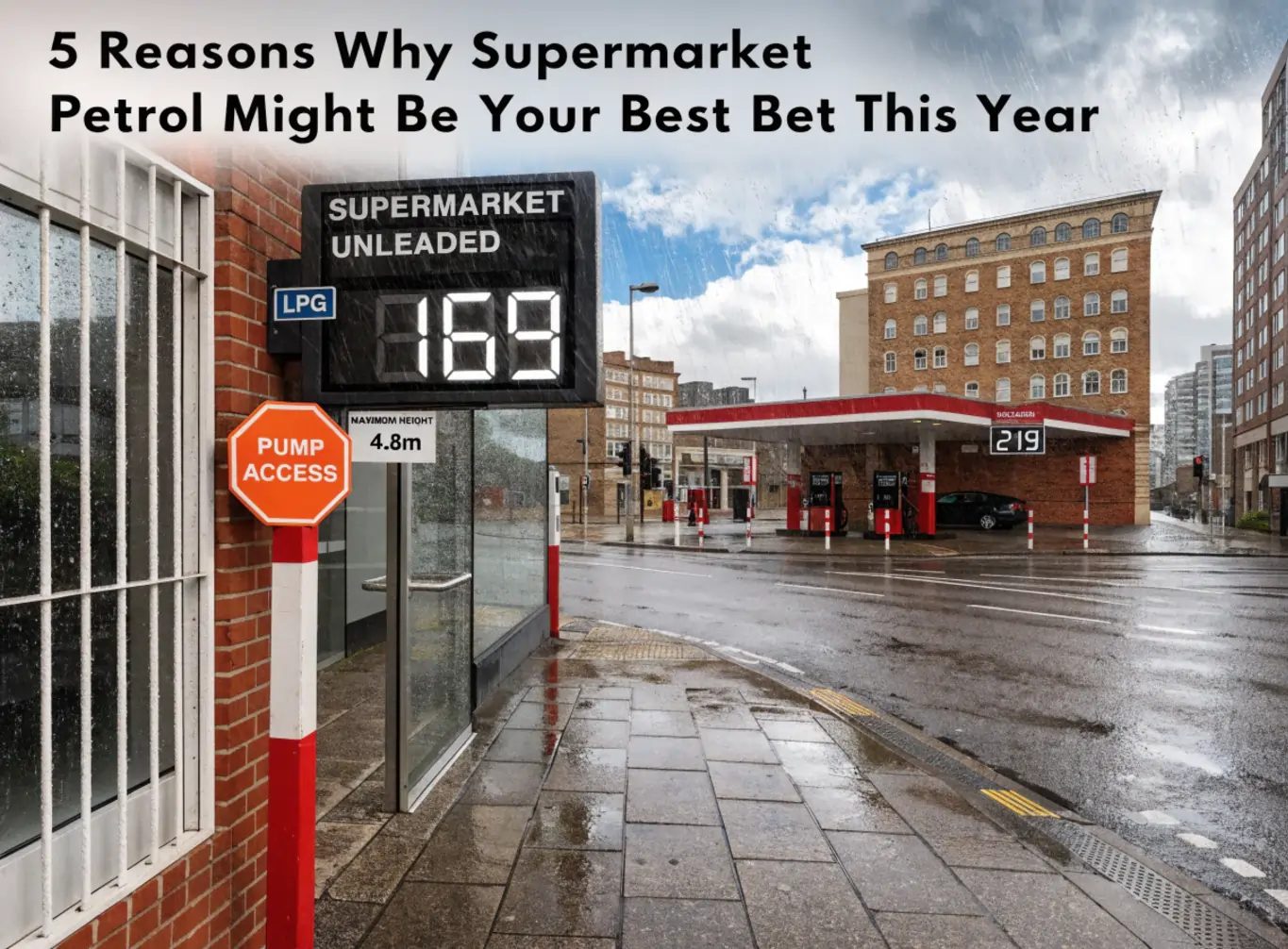
If you want to stop overpaying for petrol in 2026, heading straight to a supermarket forecourt is your most reliable option. Supermarket fuel stations like Asda, Tesco and Morrisons consistently undercut premium brands by roughly 4.9p per litre. They use cheap fuel to lure you into their grocery aisles. This strategy means you save about £6 on a standard 50 litre tank just by turning left into a supermarket instead of right into a premium garage.
I think we all feel the pinch at the pumps right now.
The wholesale market keeps fluctuating wildly due to oil prices and geopolitics. It makes budgeting a complete nightmare for the average commuter who spends anywhere between £3,000 to £4,500 a year on motoring costs. When you factor in that fuel alone accounts for 20 to 30 pence per mile for a standard petrol car, the numbers become quite frightening. Premium brands are charging around 136.5p per litre on average right now. The big grocers sit comfortably lower at about 131.6p. It adds up fast. I was looking at my own bank statements recently and realized how much I was bleeding just getting to work and back.
We just accept these high prices because we need to drive. But we really do not have to accept the absolute highest prices on the market.
The real price advantage at pumps
We should look at the raw numbers first. Supermarket petrol is simply cheaper than the big name alternatives like Shell or BP. It is a fact proven month after month by industry data.
National averages early this year show petrol hovering between 145p and 160p per litre depending on exactly where you live. Diesel is slightly worse at 155p to 170p. But the major grocers are almost always at the bottom end of that scale. I filled up my old estate car last week at a local Esso and then drove past a Costco five minutes later. Costco was charging 122.3p a litre. I was ABSOLUTELY furious. That mistake cost me a fair bit of cash. Tesco was sitting at 130.4p and Asda was at 131.9p nearby. I literally threw money away because I was too lazy to drive an extra mile down the road.
Over a year of commuting those savings become impossible to ignore. A typical driver saving 4.9p a litre will keep hundreds of pounds in their bank account. You cannot argue with that kind of money. That is a weekend away or a chunk of your car insurance paid off just by changing where you point your steering wheel once a week.
It is funny how we obsess over saving fifty pence on a block of cheese but happily overpay for fuel. We just accept the spinning numbers on the pump.
How big shops lower local costs
A strange thing happens when a massive grocery store opens a Forecourt in a new town. The whole local market suddenly shifts.
Independent retailers are forced to drop their prices to compete. If they do not, they lose all their passing trade to the giant Asda down the road. The RAC actually monitors this through their Fuel Watch initiative. They found that local prices are very often driven by the presence of supermarkets keen to compete on price. It is a fascinating dynamic. I suppose they have the financial muscle to take a hit on fuel if it means selling more groceries. The independent guys cannot buy fuel in massive bulk quantities so they struggle to match the aggressive pricing.
I suppose it makes sense when you think about it. If you live in a rural spot with only one independent garage, they can charge whatever they like. Throw a Sainsbury’s into the mix and suddenly everyone has to play fair. The big stores act like a heavy anchor on local inflation.
Competition is a wonderful thing for our wallets.
Making the most of loyalty schemes
Loyalty cards are basically essential if you want to stretch your budget. The big players know exactly how to hook us in.
Tesco Clubcard and Sainsbury’s Nectar programmes add a ridiculous amount of value. You get extra pence per litre discounts just for scanning a piece of plastic. Or you earn points that pay for your weekly shop. Which? did some comparisons recently. They showed that Clubcard users save massively on groceries. A basket might cost £580.35 with the card versus £629.25 without it. The grocery wars are fierce right now. Aldi might lead on cheap food but they do not sell fuel. Tesco and Asda win the overall convenience battle by bundling cheap petrol with discounted groceries.
That indirectly boosts the value of your fuel loyalty. It feels good to get something back from these massive corporations. I definately recommend signing up for all of them and keeping the tags on your keys. It takes two seconds to register.
You just scan and save. Simple.
Sometimes I forget my card and the cashier looks at me like I have lost my mind. They know how much money I am leaving on the table. It is a system designed to reward habit and you should absolutely take advantage of it.
Real time pricing rules change everything
The government finally did something useful for motorists this year. The new Fuel Finder rules launched on 2 February 2026.
Every single station in the UK now has to publish their pump prices in near real time. This heavily favours high volume operators like supermarkets because they already keep their pricing highly competitive. It makes it incredibly easy for drivers to check fuel prices before heading out. You never have to guess who has the best local deal anymore. In the old days we used to drive around burning petrol just looking for cheaper petrol. It was completely counterproductive.
I find myself checking my phone before every journey now. It only takes ten seconds.
Transparency forces the premium brands to justify their prices. When you can see that Morrisons is charging 132.4p and the garage next door is charging 140p, the choice is made for you. Supermarkets are going to win that battle every single time. It strips away the mystery that used to surround fuel costs. We finally have the power of information in our hands.
Tighter profit margins mean better deals
Premium fuel brands need to make their money solely from selling fuel and maybe a few overpriced chocolate bars. Supermarkets play a completely different game.
Their primary goal is to get you into the main store to buy bread & milk and maybe a new television. Because of this they operate their forecourts on much tighter margins. The Competition and Markets Authority reported that fuel margins remain persistently high across the board. Retail spreads are sitting around 13.9p per litre for petrol. That is way above the pre 2020 averages of 6.5p. A retail spread is basically the difference between what the retailer pays for the fuel and what they charge you at the pump.
But the supermarkets are the ones putting downward pressure on those averages. When wholesale oil costs drop they are usually much quicker to pass the savings on to us. They want the headline ‘cheapest fuel in town’ to drive footfall. If they drop the price of unleaded by 2p a litre they know hundreds of extra cars will pull into their lot.
It is a clever strategy. We might as well take advantage of it to accomodate our tight monthly budgets.
Are supermarket fuels actually lower quality
People ask this question all the time. ‘Is the cheap stuff going to ruin my engine?’
The short answer is absolutely not. All fuel sold in the UK has to meet the exact same strict standards. Supermarket fuel is not watered down or inferior. It comes from the same refineries as the expensive stuff. You are literally pumping the exact same base liquid into your tank whether you are at Asda or a premium garage.
Premium brands like to boast about their special additives that supposedly clean your engine. Maybe they do help a tiny bit over a hundred thousand miles. I honestly doubt the average driver will ever notice a difference. You are paying extra for marketing and a fancy logo on the pump. Interestingly electric vehicles are much cheaper per mile at about 6p to 12p to run. But until we all switch to electric cars we have to deal with petrol. And petrol is petrol.
My car runs perfectly fine on Tesco unleaded. It always has.
Do not let clever advertising convince you to spend money you do not have. The engine in your car does not care about the brand name on the receipt.
Regional differences and finding savings
Where you live plays a massive role in what you pay. It is incredibly frustrating.
Regions like the East Midlands, North East and Yorkshire & Humber often benefit from lower prices. This is largely due to supermarket density. When you have an Asda, a Tesco and a Morrisons all within two miles of each other they fight viciously for your custom. They watch each others price boards like hawks. If one drops a penny the others follow within hours.
If you live somewhere with fewer supermarkets you will probably pay more. Rural areas get hit the hardest because there is less competition. But even then driving a few extra miles to a big grocer is usually worth the trip. You just have to plan your fill ups around your larger journeys.
Just do the maths first. Do not burn three quid in petrol just to save two quid at the pump. That defeats the whole purpose.
Final Thoughts
Budgeting for a car is tough right now. Everything costs more than it used to.
But we have tools and options available to fight back. Supermarket forecourts are genuinely our best weapon against inflated motoring costs. They offer lower prices, excellent loyalty rewards and they force the whole market to be more competitive. They treat fuel as a tool to win your grocery business. That works entirely in our favour as drivers.
I have made it a strict habit to only fill up at the big grocery chains this year. The savings are very real. I used to just pull into whatever garage was closest when the fuel light came on. That laziness cost me a fortune over the years. I am much more intentional about it now.
Make a point of comparing your local stations. Grab those loyalty cards and keep an eye on the real time data. It takes a tiny bit of effort but your bank balance will thank you for it by Christmas.