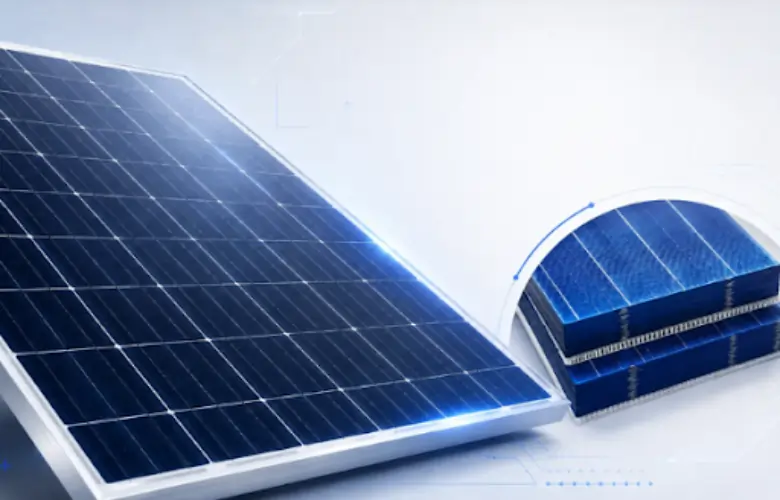
A solar street light system works through a simple energy cycle: the 6V solar panel charges the battery during the day, and the battery powers the LED light at night. The controller manages charging, discharging, protection, and lighting schedules. When the solar panel is too small, the battery cannot recover enough energy during the day, and the lighting time becomes shorter at night. When the battery capacity increases without enough solar input, recovery after rainy days becomes slow.
Choosing a 6V solar panel for street lights should follow a clear path: calculate the night-time energy use, estimate the daytime charging capacity, check battery recovery needs, then confirm the current limit of the 6V system. Panel wattage only has real value after it is matched with the LED load, battery capacity, local sunlight conditions, controller input current, cable size, and installation space.
Night-Time Energy Use Comes First
The main power load in a solar street light comes from the LED board. Before selecting a solar panel, the night-time energy demand needs to be calculated from LED power and working time.
Basic calculation:
Night energy use = LED power × working time
For a 30W solar street light running at full power for 10 hours per night:
30W × 10h = 300Wh
For a 50W solar street light running at full power for 10 hours per night:
50W × 10h = 500Wh
The difference between 30W and 50W looks small on the product label, yet after 10 hours of operation, the energy gap reaches 200Wh. Projects with rainy-day backup requirements need larger battery capacity and stronger solar charging capacity.
Some solar street lights use dimming schedules. A common setting may run at 100% brightness for the first 4 hours, 50% brightness for the next 4 hours, and 30% brightness for the final 4 hours. In this case, energy use should be calculated by time period.
Actual energy use = P1 × T1 + P2 × T2 + P3 × T3
For a 30W LED board:
First 4 hours at full power: 30W × 4h = 120Wh
Next 4 hours at 50% power: 15W × 4h = 60Wh
Final 4 hours at 30% power: 9W × 4h = 36Wh
Total night energy use:
120Wh + 60Wh + 36Wh = 216Wh
The same 30W street light may consume about 300Wh in 10 hours at full power, or about 216Wh in 12 hours under a dimming schedule. Lighting mode directly changes the required solar panel and battery configuration.
Daytime Charging Capacity Decides Panel Power
After the night-time energy use is confirmed, the next step is estimating how much energy the 6V solar panel can return to the battery during the day. Solar sizing usually considers energy demand, local solar resource, and system losses together.
For solar street light projects, peak sun hours can be used for early sizing. Peak sun hours refer to the equivalent number of hours per day when solar radiation is converted to a 1000W/㎡ standard level. The value changes by country, region, season, panel angle, and shading condition.
A simple sizing method:
Solar panel power ≈ Daily energy use ÷ Peak sun hours ÷ System efficiency
System efficiency includes losses from the controller, battery charging and discharging, cables, connectors, dust, panel temperature, and installation angle.
Example:
A 30W solar street light runs at full power for 10 hours per night:
30W × 10h = 300Wh
If the project location is calculated with 4 peak sun hours and 75% overall system efficiency:
300Wh ÷ 4h ÷ 0.75 ≈ 100W
This system needs a 6V solar panel close to the 100W level. For areas with weaker sunlight, shorter winter days, or shading around the pole, the panel power should be increased.
For the dimming example above, the 30W LED board consumes about 216Wh per night:
216Wh ÷ 4h ÷ 0.75 ≈ 72W
This configuration points toward an 80W 6V solar panel. Battery capacity, rainy-day backup, and installation conditions still need to be checked before final production.
Outdoor Output Needs Power Margin
The rated power of a solar panel, such as 40W, 60W, 80W, 120W, or 150W, is measured under standard test conditions. These conditions normally include 1000W/㎡ irradiance, 25°C cell temperature, and AM1.5 spectrum. The rating is useful for comparing panel output under the same test environment.
Outdoor street light projects work under changing conditions. Solar angle, panel tilt, dust, tree shade, building shade, panel temperature, cable length, and controller efficiency all affect actual charging performance.
A 6V 80W solar panel may reach its rated output under test conditions, yet outdoor output changes throughout the day. High-temperature regions, short winter sunshine, limited installation angle, and shading around the pole all require extra panel margin. This prevents the system from staying undercharged for long periods.
Battery Capacity Affects Recovery After Rainy Days
The battery supports night operation and rainy-day backup. The solar panel restores the battery during sunny days. If a street light consumes 300Wh per night and the project requires two rainy nights of operation, the usable battery energy needs to cover about 600Wh. Real design also needs to include discharge depth, low-temperature performance, aging margin, and controller protection settings.
Larger battery capacity needs stronger solar charging. A large battery paired with a small solar panel recovers slowly after cloudy or rainy weather. Short lighting time and slow recovery after rain are often connected with insufficient daily charging capacity.
Battery and solar panel sizing should be calculated together. Battery capacity decides how long the light can run. Solar panel power decides how fast the system can recover.
Current Limits in a 6V Solar Panel System
In a 6V system, higher panel power means higher working current. The basic electrical relationship is:
P = V × I
P means power, V means voltage, and I means current.
Estimated current on a 6V platform:
| 6V Solar Panel | Theoretical Working Current | Configuration Focus |
|---|---|---|
| 40W | About 6.67A | Small street lights, garden street lights, landscape lighting |
| 50W | About 8.33A | Small and medium low-voltage street light systems |
| 60W | About 10A | Longer lighting time or higher daily charging demand |
| 80W | About 13.33A | Small solar street lights and outdoor auxiliary power systems |
| 120W | About 20A | Project lighting systems with larger battery capacity |
| 150W | About 25A | High-current 6V charging systems, with extra attention to cables and controller |
These current values are useful for early evaluation. Final design should follow the actual Vmp, Imp, and controller data in the product specification.
A 6V system has low voltage and high current. 40W and 50W panels place less pressure on cables and connectors. 120W and 150W panels already enter a higher-current range. Controller input current, cable cross-section, connector rating, and battery charging acceptance all need to match the panel output.
Thin cables, weak connectors, or long cable runs can create voltage drop, heat, and lower charging efficiency. High-power 6V solar panels require the whole street light structure to handle the corresponding charging current.
40W to 150W Configuration Direction
6V solar panel selection should be based on night energy use, sunlight conditions, battery capacity, and current limits. The table below is suitable for early project reference. Final specifications should still be recalculated according to the project.
| 6V Solar Panel | Suitable Direction | Configuration Notes |
|---|---|---|
| 40W | Small garden street lights, landscape lights, low-power lighting | Suitable for small loads and shorter working time |
| 50W | Park pathway lights, fence lights, small low-voltage street lights | Higher charging capacity than 40W |
| 60W | Landscape street lights and longer-working lighting systems | Suitable for projects needing more stable daily charging |
| 80W | Small solar street lights and outdoor monitoring power supply | Suitable for medium battery capacity and longer working time |
| 120W | Project street lights and higher-power LED systems | Controller input current and cable size must match |
| 150W | High-current 6V charging systems and engineering lighting equipment | Cables, connectors, controller, and mounting structure need careful checking |
Low-power street lights focus on cost, size, and easy installation. Medium-power street lights need stable daytime charging and reliable night operation. High-power 6V street lights should place current control first, including cables, connectors, controller, and battery terminals.
Custom 6V Solar Panel Parameters for Street Lights
Many solar street light projects require custom 6V solar panels. Pole structure, bracket angle, battery box position, cable direction, and packaging method can all affect the final panel specification.
| Parameter | Key Point |
|---|---|
| Rated power | Match LED energy use and local sunlight conditions |
| Working voltage | Fit the 6V low-voltage system |
| Working current | Match controller, cable, and connector capacity |
| Panel size | Fit the pole, bracket, or lamp housing |
| Frame structure | Support outdoor mounting strength and stability |
| Backsheet material | Affect weather resistance and long-term performance |
| Hole position | Support field installation and batch assembly |
| Junction box position | Avoid conflict with bracket, battery box, or lamp housing |
| Cable length | Control voltage drop and installation convenience |
| Connector | Meet outdoor waterproof connection requirements |
| Packaging method | Fit bulk shipment and project installation |
For street light manufacturers and project suppliers, 6V solar panel selection can follow a practical order: calculate the night-time LED energy use, estimate daytime charging capacity under local sunlight, check battery recovery speed, confirm 6V working current, then finalize panel size, hole position, cable length, junction box position, and packaging method.
When the solar panel, battery, controller, and LED board are properly matched, the solar street light system can achieve more stable lighting time, faster recovery after rainy days, and better long-term outdoor performance.