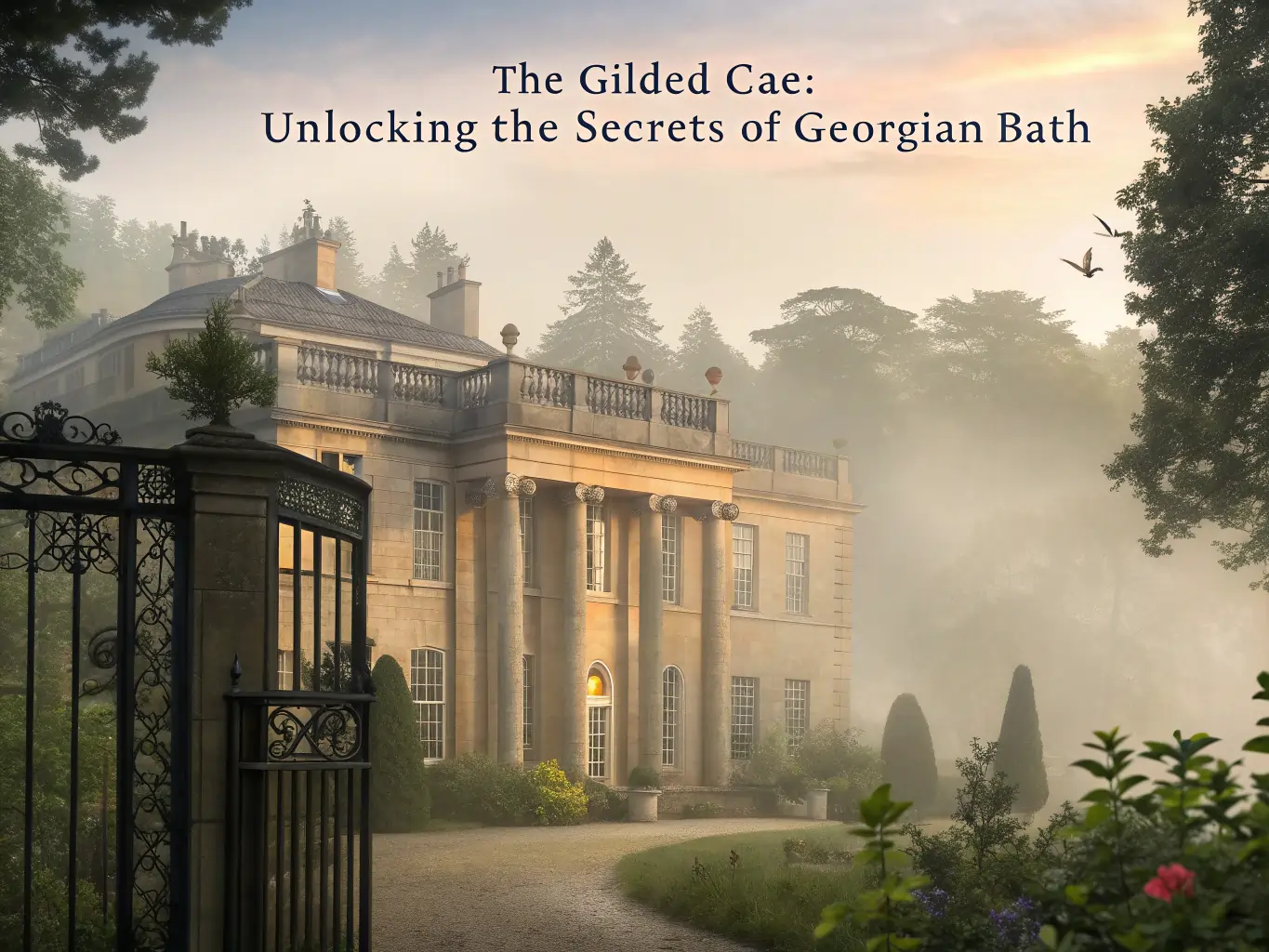
There is a specific hour of the day in Bath, usually just as the sun begins to dip below the rolling hills of the Avon Valley, when the city undergoes a transformation. The light catches the honey-coloured Bath stone – that prehistoric limestone from which the entire city was hewn – and for a fleeting moment, the streets glow with a soft, golden warmth.
Standing in the centre of the Circus, surrounded by the unbroken curve of John Wood the Elder’s architectural masterpiece, it’s impossible not to feel as though you’ve slipped through a crack in time. You half expect a carriage to rattle past on the cobblestones, or to hear the rustle of silk and the snap of a fan closing in annoyance.
Bath is, without a doubt, Britain’s most evocative city. While London charges forward into the future and Edinburgh wears its medieval history like a suit of armour, Bath feels like a stage set that has been perfectly preserved since the 18th century. It’s a UNESCO World Heritage site, of course, but it’s also a living, breathing testament to a time when elegance was the ultimate currency.
The Roman Foundation
However, to understand the Georgian splendour, one must first acknowledge the plumbing. Long before the wig-wearing aristocracy arrived, the Romans recognised the magic of this valley. They found the hot springs – the only natural thermal springs in Britain – and built Aquae Sulis.
Visiting the Roman Baths today remains an eerie experience. You can walk on the original stone pavements, looking down into the steaming green water of the Great Bath, and see the dedications to the goddess Sulis Minerva. It’s a reminder that this city has always been a place of healing and hedonism. The Romans came here to soak, to gossip, and to pray. Seventeen centuries later, the Georgians arrived to do exactly the same thing, just with better tailoring.
The Master of Ceremonies
If you wander up from the baths towards the majestic Upper Assembly Rooms, you’re walking in the footsteps of the man who arguably invented modern tourism: Richard ‘Beau’ Nash.
In the early 1700s, Bath was a rough-around-the-edges provincial town. Nash, a dandy and a social climber of the highest order, appointed himself the Master of Ceremonies. He cleaned up the streets, lit the lamps, and wrote a strict code of etiquette that governed everything from who could dance with whom, to when the music had to stop.
It was under Nash’s rule that Bath became the playground of the elite. But beneath the polite veneer of tea dances and promenade walks, the city had a pulse that was racing with adrenaline.
During the height of the season, the Assembly Rooms were effectively the premier casinos of England. While we tend to think of the Georgians as genteel figures from a Jane Austen adaptation, the reality was far more raucous. The aristocracy were obsessed with risk. Night after night, the great and the good would gather around the card tables to play Faro and Whist, wagering fortunes that could ruin a family estate in the turn of a card. According to Sister Sites UK, there are now more than three thousand online casinos available to players in this country. Were it not for the Assembly Rooms, that entire hobby may never have caught on at all.
Nash himself was less of a host and more of a “Pit Boss,” patrolling the floor to ensure that while fortunes were lost, manners were maintained. He lived by the gamble, financing his lavish lifestyle through his winnings and a percentage of the banks. Walking through those chandelier-decked ballrooms today, you can almost hear the clatter of chips and the collective intake of breath as a hand was revealed. It serves as a reminder that the Georgian era wasn’t just about repression; it was about the thrill of living on the edge, wrapped in a velvet coat.
A Masterclass in Stone
Stepping out of the history books and back onto the pavement, the sheer scale of the city’s architectural ambition still has the power to stun.
The Royal Crescent is the jewel in the crown. Built by John Wood the Younger between 1767 and 1774, it’s a sweeping arc of thirty terraced houses that overlooks the Royal Victoria Park. It is arguably the greatest example of Georgian architecture in the UK.
To truly appreciate it, you shouldn’t just stare at it from the lawn. You should inhabit it. The Royal Crescent Hotel & Spa, occupying the central houses of the crescent, offers a glimpse into how the other half lived. Taking afternoon tea in their manicured gardens, hidden behind the imposing façade, is a rite of passage. It’s a place where the scones are always warm, the clotted cream is plentiful, and the service is invisible until you need it – the very definition of British luxury.
Modern Bath: Thermal Revival
While history is the main draw, Bath hasn’t trapped itself in amber. The opening of the Thermae Bath Spa in 2006 returned the “cure” to the city.
For centuries, the actual thermal waters were off-limits for swimming, deemed unsafe. The new spa, a striking cube of glass and stone, changed that. There is something profoundly magical about floating in the open-air rooftop pool, the steam rising into the cold air, looking out over the spires of Bath Abbey and the chimney pots of the town below. It is the same water the Romans bathed in, cooled to a comfortable temperature, connecting the modern visitor to a lineage of relaxation that stretches back 2,000 years.
The culinary scene has also caught up with the capital. Restaurants like The Olive Tree (Bath’s only Michelin star) located in the basement of the Queensberry Hotel, serve up tasting menus that rival anything in Mayfair. Meanwhile, the dark, wood-panelled bars like The Dark Horse serve cocktails using local botanicals, proving that the city’s spirit of indulgence is very much alive.
Whether you’re there for the history, the literary connections, or just the chance to pretend you’re a character in Bridgerton for the weekend, Bath delivers. It’s a city that knows exactly what it is, and like a seasoned player at Beau Nash’s table, it knows it holds the winning hand.