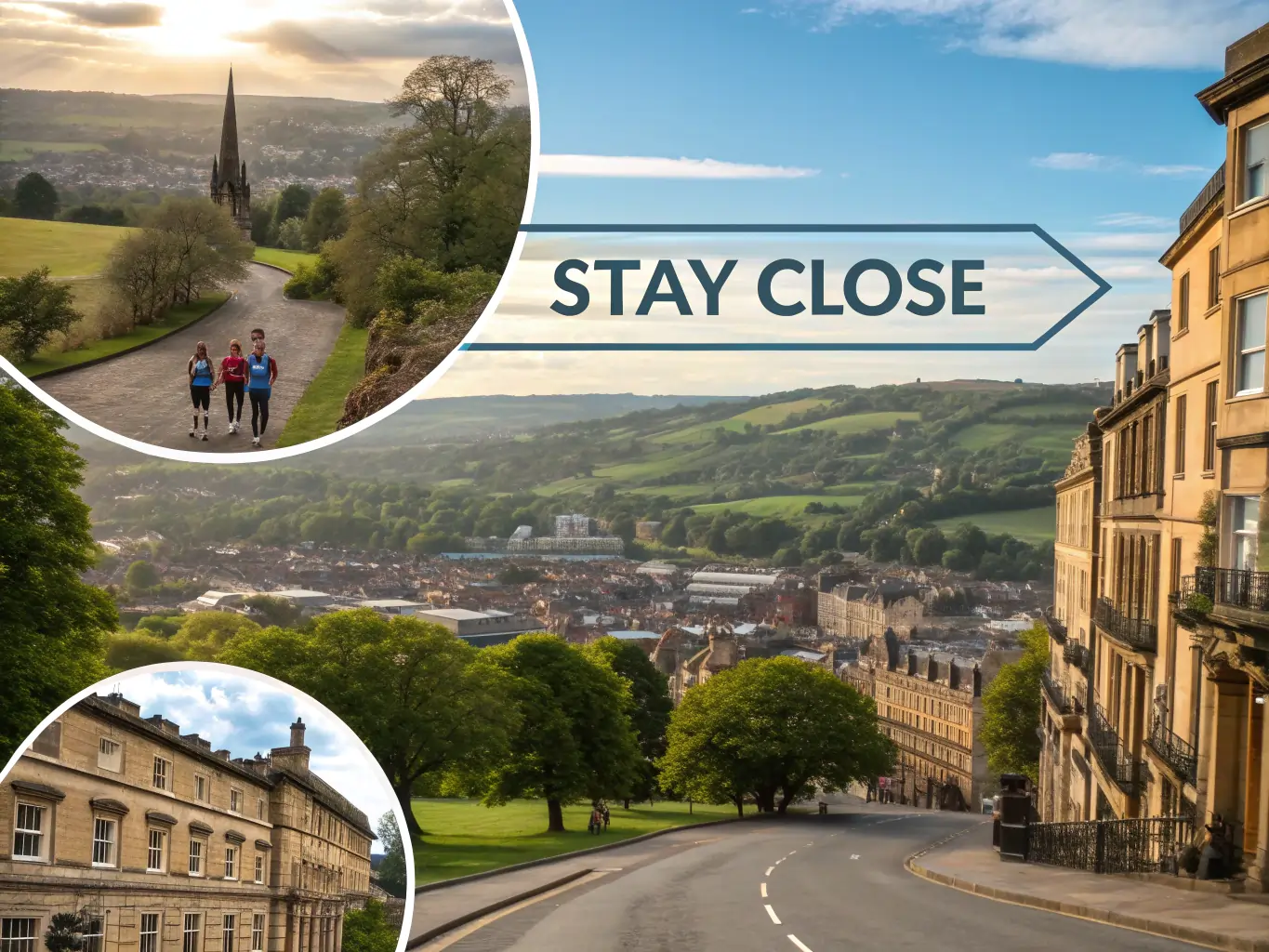
The Netflix suspense crime drama “Stay Close,” adapted from the famous book written by Harlan Coben, has been a favorite amongst viewers around the world owing to its compelling storyline, engaging characters, and beautiful cinematography. In contrast to the setting of the book in Atlantic City, the filming of the series took place only in the UK. There are many who are curious about where is “Stay Close” filmed in real life, since the setting of the fictional town Ridgewood was created quite realistically in Northern England.
What is Stay Close Filmed?
Stay Close was filmed across multiple towns and cities in Northern England, providing the series with urban, coastal, and suburban environments. Manchester’s streets and neighborhoods formed the core urban settings for the story, offering residential and city scenes. Blackpool’s coastline was used to create dramatic outdoor sequences, while St Helens provided landmarks like the Dream sculpture to add visual and symbolic depth. Runcorn and Widnes offered bridge sequences, and additional towns such as Formby, Chorley, and Morecambe Bay contributed suburban and rural backdrops.
The combination of these locations allowed the production team to craft a believable and cohesive fictional town while maintaining visual diversity. Each setting was selected to support suspenseful storytelling, enhance character development, and create a cinematic atmosphere. The real-world authenticity of Northern England strengthened the series’ mood, giving viewers a tangible sense of place.
Why Northern England Was Chosen for Filming
Northern England’s architecture, landscapes, and coastal areas made it an ideal choice for filming Stay Close. The region provided the production with urban streets, residential neighborhoods, and scenic coastal vistas without the need to travel far distances, allowing for logistical efficiency. Its unique mix of historic and modern buildings helped convey tension, secrecy, and mystery in various scenes.
Atmospheric Weather and Natural Scenery
The weather of Northern England, with its overcast skies, occasional rain, and misty mornings, enhanced the series’ suspenseful mood naturally. Coastal areas like Blackpool and Morecambe Bay added dramatic visuals, while suburban streets reinforced the story’s realistic tone. By filming in real environments rather than constructed sets, the series achieved authenticity and cinematic depth. Northern England’s scenic variety allowed each scene to carry a distinct visual and emotional identity, strengthening audience immersion.
Greater Manchester — Urban Heart of the Series
Greater Manchester served as the urban center for many scenes in Stay Close. Its streets and residential neighborhoods offered diverse locations for both interior and exterior shots. The city’s mix of contemporary architecture and historic buildings allowed the production team to depict the fictional town convincingly while maintaining cinematic quality.
Manchester Streets as Storytelling Backdrops
Manchester’s streets were transformed to reflect secrecy, tension, and everyday life under pressure. Urban alleyways, residential areas, and city roads provided the perfect canvas for suspenseful encounters and dramatic sequences. By filming in authentic locations, the creators ensured that the series felt grounded and visually compelling. The city’s atmosphere contributed significantly to the narrative tone, enhancing both character development and plot suspense.
Blackpool — Coastal Atmosphere
Blackpool played a crucial role in providing the series with coastal and seaside environments. Its piers, promenades, and beaches were used for reflective and dramatic sequences, contrasting with the urban energy of Manchester. The coastal scenery added cinematic scale and depth, allowing wide-angle shots and dynamic framing to support storytelling.
Scenic Coastal Visuals
Blackpool’s unique character contributed to the visual mood of the series, making certain sequences feel isolated and tense. The natural lighting, ocean views, and atmospheric weather all enhanced the suspense and drama. Coastal scenes allowed the narrative to expand beyond city streets, providing a visually engaging contrast to interior and suburban settings. The location became a defining element of the series’ aesthetic identity.
St Helens — Iconic Landmarks
St Helens offered one of the series’ most recognizable landmarks: the Dream sculpture. This visually striking public artwork appears in several sequences, adding symbolic meaning and narrative weight. The sculpture anchored key scenes and enhanced the visual storytelling of the series.
The Dream Sculpture’s Narrative Significance
By including such landmarks, the series gains both authenticity and visual appeal. The Dream sculpture serves as more than a background element; it becomes a symbolic representation of the characters’ emotional journeys. Integrating real-world landmarks reinforced Northern England’s identity while supporting the plot’s suspenseful elements.
Runcorn and Widnes — Dramatic Bridges
The Silver Jubilee Bridge connecting Runcorn and Widnes features in several important sequences. Its architectural scale and visual presence contribute to cinematic tension during transitional scenes and key plot moments.
Bridges as Visual Storytelling Tools
Bridges, roads, and other structural elements were used to emphasize movement, separation, and suspense. By incorporating these features, the series achieved a level of realism that supports both narrative pacing and visual storytelling. The inclusion of real infrastructure highlights the production’s careful attention to location choice.
Other Notable Locations in Northern England
Additional filming locations included Formby, Chorley, and Morecambe Bay. These towns provided a mix of suburban streets, rural landscapes, and scenic coastal areas. Their inclusion expanded the series’ visual variety, making Ridgewood feel alive and multidimensional.
Suburban and Rural Scenes
Suburban streets, quiet rural roads, and coastal vistas enhanced the atmosphere of suspense and reflection. By incorporating diverse locations, the production created a sense of realism that supports the story’s tension and drama. These towns contributed to Ridgewood’s authenticity while maintaining the cinematic style of the series.
Where Exactly Is Stay Close Filmed?
To summarize, the series was filmed across multiple Northern England locations. Manchester provided urban streets and residential areas, Blackpool contributed coastal sequences, and St Helens featured the Dream sculpture landmark. Runcorn and Widnes were used for bridge scenes, while Formby, Chorley, and Morecambe Bay offered suburban and scenic backdrops.
Northern England as a Character
These locations work together to create a visually cohesive fictional town while maintaining diverse scenery. Northern England becomes an essential part of the narrative, enhancing suspense, emotion, and storytelling depth. Each location adds meaning and realism, making Ridgewood feel immersive and tangible for viewers.
Why These Locations Enhance Stay Close
Northern England’s locations influence the series beyond being a backdrop. Manchester streets convey secrecy and tension, Blackpool coastal scenes evoke reflection and isolation, and landmarks like the Dream sculpture add symbolic depth. Bridges and rural areas emphasize movement and contrast, supporting narrative flow.
Authentic Locations Support Storytelling
Filming in real-world locations gives the series authenticity, making suspense and emotion more engaging. Each environment was selected to strengthen narrative impact, character development, and cinematic quality. The careful location choices enhance both visual storytelling and audience immersion.
(FAQs)
1. Where is Stay Close filmed?
Stay Close was filmed entirely in Northern England, including cities and towns like Manchester, Blackpool, St Helens, Runcorn, Widnes, Formby, Chorley, and Morecambe Bay. These locations recreate the fictional town of Ridgewood.
2. Why was Northern England chosen for filming Stay Close?
Northern England offered diverse urban, suburban, and coastal locations. Its weather, architecture, and landscapes helped create a realistic and suspenseful setting that enhanced the series’ tone.
3. Which landmarks appear in Stay Close?
Key landmarks include the Dream sculpture in St Helens and the Silver Jubilee Bridge connecting Runcorn and Widnes. These iconic structures add visual and symbolic significance to the series.
4. Did the series use any studio sets?
While some interior scenes were filmed on sound stages, the majority of Stay Close was shot on location across Northern England, adding authenticity and realism to the series.
5. How did Blackpool contribute to the series?
Blackpool’s coastal scenery provided dramatic outdoor sequences, creating a contrast with urban settings and enhancing the cinematic and suspenseful atmosphere of the series.
Conclusion
In summary, where is Stay Close filmed ranges through Northern England which includes Manchester, Blackpool, St Helens, Runcorn, Widnes, Formby, Chorley, and Morecambe Bay. The reason for choosing each of these places was to provide a setting that would be realistic, thrilling, and cinematic as well for the fictional town of the story.
Northern England has become a character in this TV series. It affects the atmosphere of the show, its tone, and its narrative line. For viewers who are fond of visiting film sets, these places will show them how to turn the real world into the fiction one.